

Table of Contents
Maruti 800 – Introducing
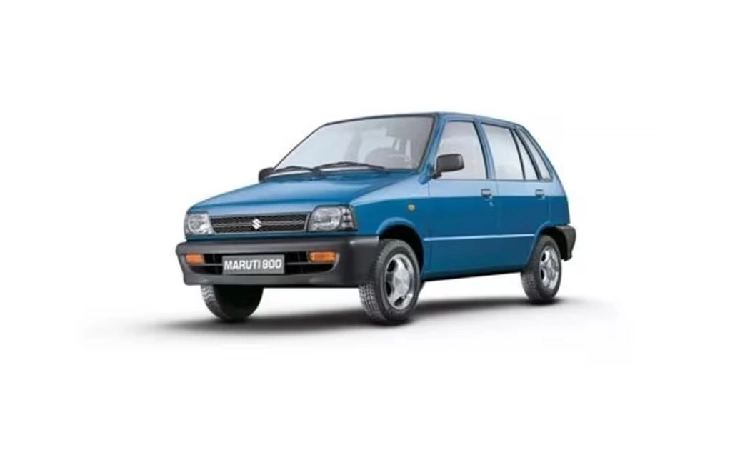
Introduced in 1983, the Maruti Suzuki 800 became one of India’s most iconic small cars. This renowned hatchback played a major role in making personal car ownership accessible to Indian families. The petrol variant was listed at approximately ₹2.19 lakh, while the LPG variant ranged from ₹2.24 lakh to ₹2.42 lakh, depending on the version and market.
You mentioned that the Maruti 800 has an engine immobilizer. However, your Maruti 800 AC, a June 2003 model, does not have one. This raises an important question: When was the engine immobilizer introduced in the Maruti 800?
Maruti Suzuki India Limited, formerly known as Maruti Udyog Limited, is one of India’s leading automobile manufacturers. The Maruti 800, introduced in 1983, was marketed as a compact city car. The first-generation Maruti 800 (SS80) was inspired by the 1979 Suzuki Fronte and featured an 800 cc F8B engine, which gave the car its name.
The Maruti 800 became synonymous with affordability, reliability and practical family transportation, particularly for India’s growing middle class. Its historical prices varied by model, year and location.
The Maruti Suzuki 800 was offered in several colours, including Superior White, Bright Red, Silky Silver, Caribbean Blue and Icy Blue, with availability depending on the variant and production year.
Maruti 800 – Technical Specifications and Feature List
Detailed technical specifications and feature lists are important when comparing vehicles, particularly older models. Manufacturer websites do not always provide complete historical information, and features can vary considerably between production years and variants.
For a car like the Maruti 800, distinguishing between model years is especially important. Safety equipment, engine specifications, interior features and security systems may differ between versions.
Without specific introduction dates, readers may become confused about which features were available in their particular car.
Maruti Suzuki 800 Versions
The Maruti 800 was offered in different variants over its production life, including versions with manual transmissions. Exact variant names and equipment depended on the model year.
Some owners also explore performance modifications to increase the output of the small 800 cc engine. However, making a small economy car significantly faster can become expensive.
Turbocharging and exhaust manifold modifications may require upgrades to the cooling system and fuel delivery system. Carburettor-equipped versions would need appropriate adjustments, while increased engine output may also require improvements to the braking system.
A small 800 cc engine can experience additional stress after extensive modifications, potentially reducing its lifespan. Cooling, lubrication and internal engine components must be considered carefully.
If substantial performance is the goal, choosing a vehicle with a more powerful engine may be more practical and economical than extensively modifying the Maruti 800.
Maruti Suzuki 800 Colours
The Maruti 800 was available in various colours throughout its production life. Options included Wine Red, Pearl Silver, Superior White, Silky Silver, Bright Red, Blue Blaze, Caribbean Blue and Icy Blue.
Not every colour was offered for every variant or model year, so owners restoring a particular vehicle should check its original paint specifications.
Maruti Suzuki 800 Competitors
The Maruti 800 competed in India’s small-car market and helped establish the popularity of affordable hatchbacks. Depending on the period and market segment, its competitors and alternatives included the Maruti Suzuki Alto, Datsun redi-GO, Tata Tiago, Maruti Suzuki Wagon R, Renault Kwid and Hyundai Santro.
India’s automotive history also includes several other iconic vehicles. The Hindustan Ambassador became a familiar sight on Indian roads, while the Fiat Tipo sedan represents another chapter in the evolution of practical family cars.
The industry has since expanded to include premium manufacturers such as Audi and BMW, reflecting the wide range of vehicles now available to Indian consumers.
Which Engine Is Compatible with the Maruti 800?
The Maruti 800 originally used a small petrol engine, with specifications varying by generation and version. Replacing the original engine or converting the vehicle to electric power requires careful planning and professional engineering.
An electric conversion would involve considerably more than installing a motor and charging point. It may require a compatible electric motor, battery pack, motor controller, inverter where applicable, charging equipment, cooling arrangements, wiring, mounting modifications and appropriate safety systems.
Any conversion must also account for vehicle weight distribution, braking, structural integrity and applicable registration and approval requirements.
Before attempting an engine replacement or electric conversion, consult a qualified automotive engineer familiar with the Maruti 800 and local regulations.
Using a Maruti 800 Car Engine in Another Vehicle
Some enthusiasts consider adapting a small car engine for use in another vehicle, such as a motorcycle. Although the Maruti 800 engine is relatively compact, such a project involves substantial mechanical challenges.
Removing the original gearbox, adapting engine mounts, selecting a compatible transmission and designing a suitable drive system are complex tasks. The starter motor, clutch, gear ratios, cooling system and frame strength must also be addressed.
A car engine is not automatically suitable for a motorcycle, and a conversion of this kind requires specialist engineering to ensure reliability and safety.
For people interested in alternative compact vehicles, the mini carry auto is another example of how small, practical vehicles serve different transportation needs.
Common Problems
One issue experienced by some older carburettor-equipped Maruti 800 models is difficulty starting the engine, particularly in colder conditions.
The carburettor mixes air and fuel for combustion, and the correct mixture can vary with engine temperature and operating conditions. The choke helps provide a richer mixture when starting a cold engine.
If your vehicle has a manual choke, follow the instructions for your particular model and reduce the choke as the engine warms up. Leaving it engaged for too long can increase fuel consumption, cause rough running and contribute to engine flooding.
A petrol smell around the engine bay should not automatically be considered normal. Although carburettor-related fuel issues can cause this symptom, a fuel leak or damaged hose can create a serious fire risk. Switch off the engine and have the vehicle inspected if you suspect a leak.
Other issues that can affect older Maruti 800 vehicles include worn ignition components, fuel-system problems, deteriorated hoses, battery issues and ageing electrical connections.
Regular maintenance and prompt diagnosis can help keep an older car reliable.
Conclusion
The Maruti Suzuki 800 needs little introduction. It became one of India’s most recognisable cars and helped make car ownership more accessible to families across the country. Beyond being an affordable vehicle, it became a symbol of changing aspirations and the growth of India’s passenger-car industry.
The Maruti 800 remained a bestseller in the small-car segment until newer models, including the Maruti Suzuki Alto, gradually took over. Although production ended in 2014, the 800 continues to attract enthusiasts and owners who appreciate its simplicity and historical importance.
When researching a particular Maruti 800, it is important to distinguish between model years and variants, especially when checking features such as an engine immobilizer. The presence of an immobilizer should be confirmed using the specific vehicle’s documentation or by consulting an authorised service professional, rather than assuming that every version had the same equipment.