

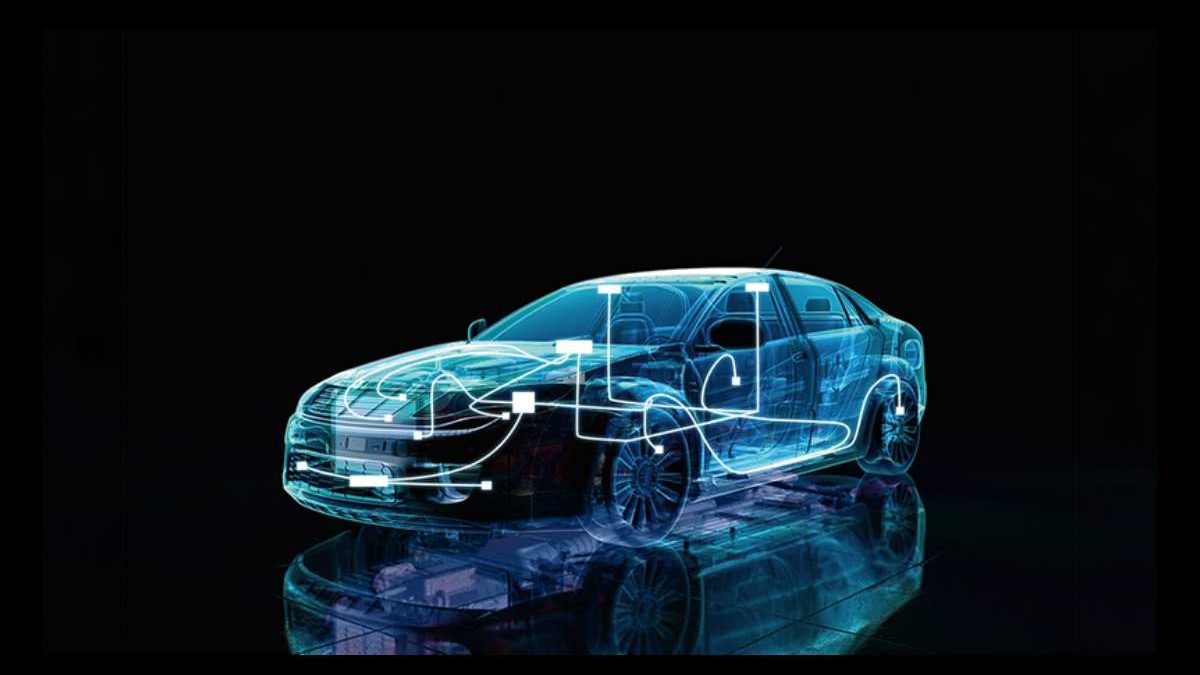
As we drive modern vehicles, it is easy to overlook the complex communication happening beneath the dashboard and under the hood. Behind the scenes, numerous electronic control units (ECUs), sensors, and computing systems communicate continuously to manage everything from engine performance and braking to entertainment and driver assistance.
This communication network, known as the in-vehicle network, has evolved significantly alongside automotive technology. Early vehicles relied primarily on mechanical systems, while modern vehicles depend on sophisticated electronic networks to coordinate essential functions.
From Controller Area Network (CAN) and Local Interconnect Network (LIN) to FlexRay and Automotive Ethernet, each development has helped address the growing demand for faster, more reliable, and more efficient vehicle communication.
Let’s explore the history of in-vehicle networking, its major technologies, its challenges, and the innovations shaping the future of connected vehicles.
Table of Contents
A Journey from Simplicity to Complexity
Early automobiles relied mainly on mechanical components, with relatively few electronic systems requiring communication. As vehicles became more advanced, manufacturers began introducing electronic fuel injection, engine management systems, electronic braking controls, airbags, and other features.
Each electronic system required information from sensors and other components. Managing these functions independently would have required extensive wiring and complicated vehicle designs.
Electronic control units provided a way to manage individual functions, while in-vehicle communication networks allowed these units to exchange information efficiently.
For example, an engine control unit may use sensor information to regulate engine operation, while other control units manage braking, steering assistance, lighting, and climate control.
As the number of electronic components increased, manufacturers needed standardised communication methods that reduced wiring complexity and improved reliability.
This development laid the foundation for modern in-vehicle networking solutions.
The CAN Revolution
The Controller Area Network (CAN) protocol, introduced by Bosch in the 1980s, was a major milestone in automotive communication.
CAN allowed electronic control units to exchange messages over a shared communication bus rather than requiring separate point-to-point connections between every component.
This helped reduce wiring complexity, improve communication reliability, and simplify the integration of electronic systems.
How CAN Works
CAN allows connected control units to transmit and receive messages according to defined communication rules. Messages are identified by their identifiers, which help determine their meaning and priority.
For example, vehicle systems may use CAN communication for:
- Engine management and powertrain controls.
- Anti-lock braking system information.
- Airbag and restraint-system communication.
- Instrument-cluster information.
- Steering and stability-control functions.
- Diagnostic information and fault reporting.
CAN remains widely used because it is robust, relatively cost-effective, and well suited to many automotive control applications.
However, modern vehicles increasingly require higher data rates and the ability to handle larger volumes of information. These requirements have encouraged the use of additional networking technologies alongside CAN.
The LIN Complement
The Local Interconnect Network (LIN) was developed as a cost-effective complement to more capable automotive networks such as CAN.
LIN is designed for relatively simple, low-speed communication tasks that do not require the performance or complexity of higher-speed networks.
Typical applications include controlling:
- Power windows and door locks.
- Electrically adjustable mirrors.
- Seat-positioning mechanisms.
- Interior lighting.
- Certain climate-control actuators.
LIN generally uses a simpler communication structure and less expensive hardware than CAN, making it suitable for functions where high bandwidth is unnecessary.
Using different network technologies for different tasks allows manufacturers to balance performance, reliability, and cost. CAN may handle more demanding control functions, while LIN manages simpler devices.
Entering the Era of FlexRay
As automotive systems became more sophisticated, manufacturers needed communication technologies capable of supporting more demanding real-time applications.
FlexRay was developed to provide higher data rates and predictable communication timing for certain automotive systems. It was designed for applications where reliable, time-controlled data exchange is particularly important.
Depending on the vehicle architecture, FlexRay has been used in applications involving chassis control, powertrain coordination, and advanced electronic systems.
Why FlexRay Matters
One important characteristic of FlexRay is its support for scheduled communication, which can help connected systems exchange messages at predictable times.
This can be valuable in applications where timing and coordination are essential. However, FlexRay is not a universal replacement for CAN. Its additional capabilities come with greater system complexity and cost.
Many vehicle architectures therefore use a combination of network technologies, selecting the appropriate protocol according to each system’s requirements.
Ethernet Takes the Wheel
Automotive Ethernet represents another major step in the evolution of in-vehicle networking.
Traditional automotive networks remain useful for many control functions, but high-resolution cameras, advanced driver-assistance systems, digital dashboards, and connected entertainment systems can generate significantly more data.
Automotive Ethernet supports higher-bandwidth communication and allows manufacturers to build networks capable of handling these growing demands.
Depending on the Ethernet standard and hardware used, automotive implementations can support data rates ranging from tens or hundreds of megabits per second to multiple gigabits per second.
Applications of Automotive Ethernet
Automotive Ethernet can support a variety of applications, including:
- Advanced driver-assistance systems (ADAS): Transferring information from cameras, radar systems, and other sensors.
- Infotainment systems: Connecting displays, media systems, and other digital features.
- High-resolution cameras: Moving large amounts of image data between electronic systems.
- Centralised vehicle computing: Connecting powerful computers with other vehicle components.
- Diagnostics and software updates: Supporting communication between compatible systems and diagnostic equipment.
Ethernet can also help reduce the complexity of networks that need to transport large volumes of data between multiple systems.
However, standard Ethernet technology must be adapted to automotive requirements involving cabling, electromagnetic compatibility, reliability, and environmental conditions. Automotive Ethernet implementations are designed to address these needs.
The Role of In-Vehicle Networking in Electric Vehicles
The transition towards electric vehicles has increased the importance of electronic communication and software-controlled systems.
Electric vehicles rely on multiple interconnected components, including the battery-management system, motor controller, power electronics, thermal-management system, and charging interface.
These components need to exchange information to manage vehicle performance, safety, battery operation, and energy use.
Battery and Powertrain Communication
A battery-management system monitors factors such as cell voltage, temperature, and other operating conditions. It communicates with other vehicle systems to help manage battery operation within defined limits.
The motor controller and power electronics also depend on coordinated information exchange to deliver the requested driving performance.
In-vehicle networks help these systems operate together and communicate important status information.
Improving Energy Efficiency
Vehicle networks can support efficient energy management by enabling systems to share operating information. This helps controllers coordinate functions such as battery cooling, power delivery, and energy consumption.
However, networking alone does not guarantee lower emissions or higher efficiency. The overall outcome depends on vehicle design, control strategies, components, driving conditions, and the energy source used.
Empowering Vehicle Diagnostics and Predictive Maintenance
Modern vehicles can monitor numerous operating conditions and generate diagnostic information when problems occur.
Electronic control units may detect faults, record diagnostic trouble codes, and communicate relevant information to other systems. Technicians can use compatible diagnostic equipment to investigate these issues.
More advanced vehicle architectures can also support monitoring that helps identify developing problems before they cause a breakdown.
The Benefits of Vehicle Diagnostics
In-vehicle networking can support:
- Fault detection: Identifying abnormal readings or system malfunctions.
- Maintenance planning: Helping technicians determine which components need attention.
- Reduced diagnostic time: Providing access to fault codes and system information.
- Vehicle reliability: Helping identify issues that could affect operation.
- Fleet management: Supporting the collection of vehicle status information across multiple vehicles.
Predictive maintenance is not possible for every component or fault. Its effectiveness depends on available sensors, the quality of the collected data, diagnostic models, and suitable maintenance procedures.
For a closer look at the computing hardware and electronic systems involved in vehicle operation, read our article on what a driving computer is.
Enhancing Passenger Experience Through Connected Technology
In-vehicle networking does more than coordinate mechanical and electronic systems. It also supports many of the digital features that drivers and passengers use every day.
Modern infotainment systems can combine audio playback, navigation, smartphone connectivity, digital displays, and communication services.
These features depend on communication between the vehicle’s electronic components, connected devices, and external networks.
In-Car Entertainment
Digital audio systems and smartphone integration have changed how people listen to music and podcasts while driving.
For example, some in-car entertainment accessories use a smartphone to stream audio and provide a dedicated interface for playback controls.
Our article about Spotify Car Thing explores one example of an accessory designed to simplify in-car music control. The device has since been discontinued by Spotify, but its original design illustrates the demand for convenient digital entertainment in vehicles.
Navigation and Connectivity
Connected infotainment systems may receive traffic information, map updates, and online data through a smartphone connection or a built-in communication module.
Vehicle networks help distribute relevant information between compatible systems and displays.
The quality of the overall experience depends on the vehicle’s hardware, software, network coverage, and compatibility with external services.
The Role of Innovation and the Challenges Ahead
As vehicles become more connected, in-vehicle networking must address several challenges.
Cybersecurity
Connected vehicle systems can communicate with external devices, diagnostic tools, mobile networks, and cloud services. These connections can introduce security risks if they are not properly designed and maintained.
Manufacturers use measures such as authentication, secure communication, access controls, software updates, and network segmentation to help protect vehicle systems.
Cybersecurity must be considered throughout a vehicle’s design and operating life because vulnerabilities may emerge after a vehicle has been manufactured.
Interoperability
A vehicle may contain components from multiple suppliers, each with specific communication requirements.
Ensuring that these components exchange data correctly requires common standards, compatible implementations, and extensive testing.
Standards help improve interoperability, but manufacturers must still validate the complete system to ensure that it performs reliably.
Managing Complex Systems
Modern vehicles may contain numerous ECUs, software platforms, and communication networks. Coordinating these components can make vehicle development, testing, maintenance, and troubleshooting more complicated.
Manufacturers are increasingly exploring architectures that consolidate some functions into central computers or domain controllers. These approaches can simplify certain parts of the architecture but also create new design and reliability considerations.
The Future Roadmap: Software-Defined and Connected Vehicles
Automotive networking is evolving alongside software-defined vehicles, advanced driver-assistance systems, and connected mobility services.
In a software-defined vehicle, software plays a central role in controlling or expanding vehicle functions. Depending on the architecture, manufacturers may be able to introduce certain improvements through software updates rather than requiring a complete hardware replacement.
Higher-bandwidth networking technologies can help connect central computing systems to sensors, displays, and other electronic components.
Wireless Connectivity and V2X Communication
Wireless technologies such as cellular networks and Wi-Fi can connect vehicles to external services and other devices.
Vehicle-to-everything (V2X) communication refers to technologies that allow vehicles to exchange information with other vehicles, infrastructure, pedestrians’ devices, or network services, depending on the implementation.
Potential applications include traffic warnings, cooperative road-safety systems, and the sharing of relevant information about road conditions.
These capabilities depend on the communication technology, infrastructure, local regulations, and deployment conditions. They do not automatically guarantee better safety or uninterrupted connectivity.
Autonomous Driving
Automated driving technologies rely on sensors, computing systems, software, and communication between vehicle components.
Some automated-driving functions depend heavily on fast data movement from cameras, radar, and other sensors to processing systems. The resulting information must be used within the timing and reliability requirements of the vehicle’s control architecture.
In-vehicle networking supports this communication, but autonomous driving also requires sophisticated perception, decision-making, control, system validation, and safety engineering.
To learn more about this area, explore our guide to autonomous vehicles.
Conclusion
The evolution of in-vehicle networking solutions reflects the wider transformation of the automotive industry.
From early electronic control units and CAN to LIN, FlexRay, and Automotive Ethernet, each technology has helped address different communication requirements within modern vehicles.
These networks support essential control systems, diagnostics, electric vehicle operation, infotainment, and advanced driver-assistance technologies. At the same time, they introduce challenges involving cybersecurity, interoperability, complexity, and long-term maintenance.
Looking ahead, higher-bandwidth networks, centralised computing architectures, wireless connectivity, and software-defined vehicles will continue to shape automotive engineering.
As vehicles become increasingly connected and software-driven, in-vehicle networking will remain an essential foundation for coordinating their systems, improving their capabilities, and supporting the next generation of automotive innovation.