

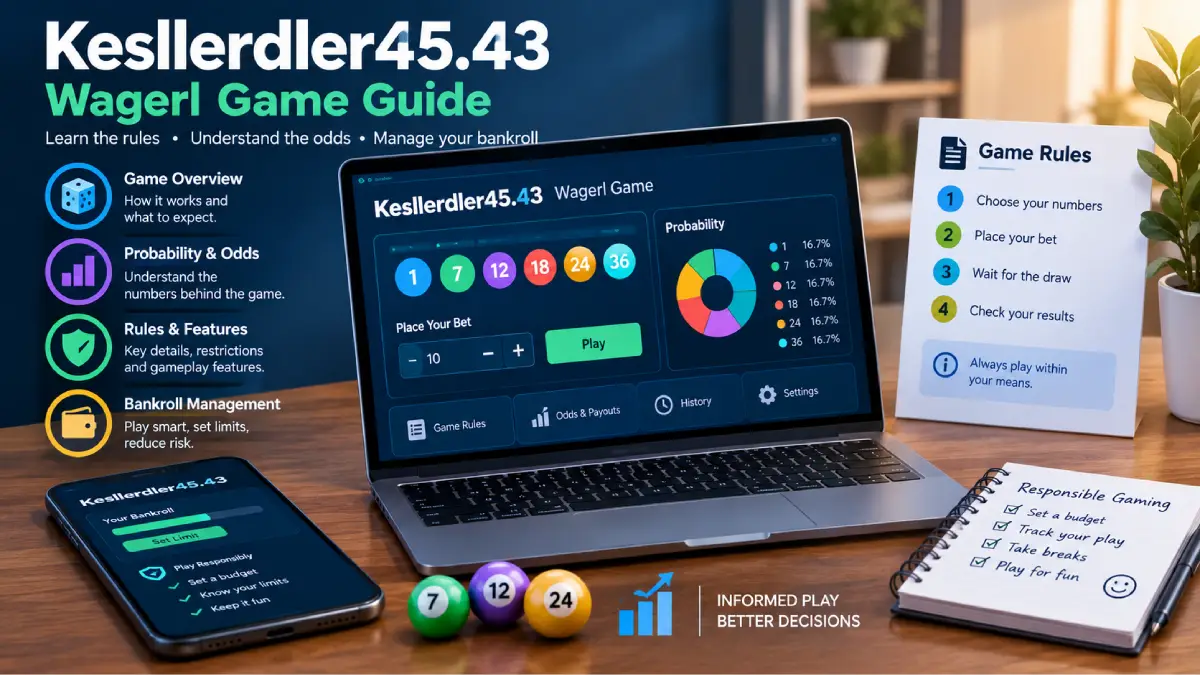
The Kesllerdler45.43 Wagerl Game is explained as a framework on which wagers are laid down within a format where both choices and chances take their place. Thus, rather than depending on nothing more than sheer luck and intuition, the system revolves around rules, exposure of one’s resources and profit or loss as determined by chance.
Those interested in investigating this kind of game need to get past the potential of a win in order to understand the fundamentals of the system itself.
Aspects that must be explored include just what options one has in terms of placing a wager, how winning and losing are actually determined, if the rules governing this game are clearly delineated and if there are sufficient checks to prevent one’s resources from being compromised to a damaging extent.
In this article we cover the core elements one must consider prior to making one’s decisions regarding The Kesllerdler45.43 Wagerl Game.
Table of Contents
What Is the Kesllerdler45.43 Wagerl Game?
The Kesllerdler45.43 Wagerl Game is described as a competitive wagering environment built around a mixture of probability and strategic decision-making.
The basic idea is that players face uncertain outcomes while using available information to make decisions. Some parts of the experience may involve randomness, while other elements can involve understanding rules, evaluating available information and controlling the size of individual wagers.
This distinction is important because a strategy cannot remove uncertainty from a game based on chance. A player may make what appears to be a sensible decision and still receive an unfavourable outcome.
For that reason, the game should be approached as a risk-based activity rather than as a guaranteed method of generating money.
Why Does It Stand Out?
The main point of interest is the combination of structured decision-making and probabilistic outcomes.
A clearly defined system can make it easier for users to understand what they are doing before committing funds. Transparency is particularly important when financial risk is involved.
Before participating, users should look for:
- Clearly explained rules
- Available bet types
- Minimum and maximum stakes
- Payment and withdrawal conditions
- Any applicable fees
- Information about random-number generation
- Licensing or regulatory information where relevant
- Responsible gambling controls
These details can provide a much better basis for evaluation than promotional claims or anecdotal success stories.
How Luck and Skill Can Influence Gameplay
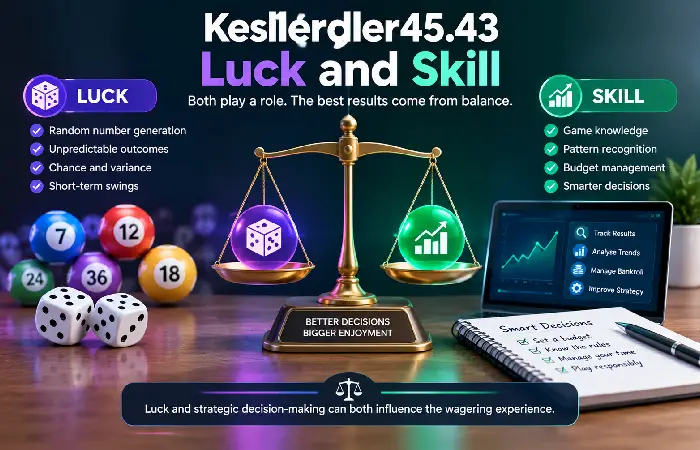
The balance between luck and skill depends heavily on the particular wagering format.
Random outcomes can create significant short-term variation. Even if a player follows the same approach repeatedly, individual results may differ considerably.
Skill can still matter in areas such as understanding probabilities, comparing risks, interpreting information and controlling stake sizes. However, these skills should not be confused with the ability to predict genuinely random outcomes. For more related articles visit our website.
A useful way to think about the relationship is:
Luck influences individual outcomes, while disciplined decision-making can influence how a person manages exposure to those outcomes.
This distinction is important because a short winning period does not necessarily prove that a strategy has a long-term advantage.
What to Know Before You Wager: Rules, Bets and Risk
Before considering any wager, read the rules carefully.
Different bet types can have different levels of risk, payout structures and probabilities. Understanding these differences is more useful than simply choosing an option because it appears popular.
Understand the Rules
The rules should explain how an outcome is determined and what happens after a bet is placed.
Pay particular attention to:
- Eligibility requirements
- Betting periods
- Settlement rules
- Cancellation conditions
- Payout calculations
- Maximum and minimum wager limits
- Dispute procedures
If important information is difficult to find, that should be treated as a reason to investigate further.
Think About Bankroll Management
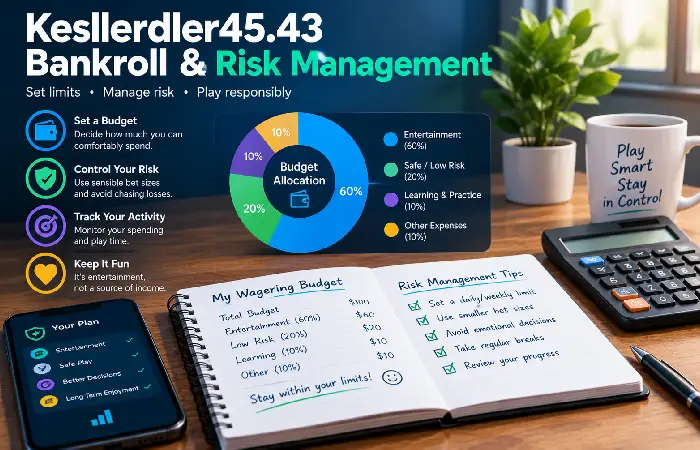
Bankroll management means deciding in advance how much money can be allocated to wagering and avoiding stakes that could create financial difficulty.
A simple approach is to establish a fixed entertainment budget rather than increasing wagers after losing.
Chasing losses can quickly increase exposure. Similarly, increasing a wager simply because previous bets were successful can create overconfidence.
The goal of responsible bankroll management is not to guarantee profit. It is to keep potential losses within an amount that the person can afford to lose.
Check Fairness and RNG Information
If random-number generation is used, users should look for information explaining how outcomes are generated and tested.
For example, the UK Gambling Commission’s Remote Gambling and Software Technical Standards state that random outcomes should be demonstrably random and that games should operate according to the rules and probabilities described to customers.
UK Gambling Commission – Random Outcomes and Technical Standards
Strategies, Tips and Community Insights
There is no strategy that can guarantee a winning result in a wagering activity involving random outcomes.
However, users can make their decision-making more structured.
One useful approach is to keep records of wagers, stake sizes and results. This can help identify behavioural patterns, such as repeatedly increasing stakes after losses or making decisions based on emotion.
It is also useful to separate entertainment decisions from financial expectations. A previous win should not automatically be treated as evidence that the next outcome is more likely to succeed.
Community discussions can provide useful observations about user experience, but they should be treated as anecdotal evidence rather than proof of fairness or profitability.
Before relying on a community claim, compare it with the game’s published rules, regulatory information and independently verifiable evidence.
Common Mistakes to Avoid
Several mistakes can increase unnecessary risk:
- Chasing losses – increasing stakes to recover previous losses.
- Overconfidence after winning – assuming a short winning streak will continue.
- Ignoring the rules – placing wagers without understanding settlement conditions.
- Poor stake sizing – committing too much of a personal budget to one outcome.
- Relying on myths – believing that random outcomes can always be predicted.
- Ignoring total costs – overlooking fees, payment charges or other deductions.
A disciplined approach cannot eliminate uncertainty, but it can reduce avoidable mistakes.
“Pros and Cons” Section
This can improve readability and help the article satisfy comparison-oriented searches.
| Potential Advantages | Potential Drawbacks |
| Structured wagering framework | Outcomes may involve substantial uncertainty |
| Encourages understanding of rules | Winning is not guaranteed |
| Can involve strategic decision-making | Losses can occur quickly |
| Risk management can be planned | Fees or limits may apply |
| Data can support better decisions | Community claims may not be independently verified |
This section should remain neutral rather than making the game sound like a guaranteed opportunity.
Frequently Asked Questions
Is Kesllerdler45.43 Wagerl Game Legal Where You Play?
The legality of wagering activities depends on the jurisdiction where the user is located and the specific operator or service involved. Laws can differ considerably between countries and regions.
Before participating, check the applicable local gambling regulations and whether the relevant operator holds any licence required in that jurisdiction.
Can Beginners Win Without Prior Experience?
A beginner can experience a winning outcome, but there is no guarantee of winning simply because a person follows a particular strategy.
New users should first understand the rules, probabilities and financial risks before considering any wager. Starting with an appropriate entertainment budget is more important than attempting to recover losses quickly.
What Are the Most Common Betting Mistakes?
Common mistakes include chasing losses, placing excessively large wagers, misunderstanding probabilities, relying on betting myths and making emotional decisions.
Another mistake is treating a short-term winning streak as proof that a strategy will always work.
Are There Any Hidden Fees or Charges?
Potential fees depend on the platform, payment method, account terms and other conditions.
Before committing money, review the available terms carefully. Check deposit and withdrawal conditions, transaction charges, currency conversion costs and any other applicable deductions.
How Is Fairness and RNG Verified?
Where a wagering game uses an RNG, users should look for clear information about how random outcomes are generated and tested.
Regulatory technical standards can provide useful benchmarks for understanding RNG requirements. For example, the UK Gambling Commission states that RNG outputs should be demonstrably random and that game outcomes should follow the relevant rules and expected probabilities.
However, the existence of an RNG alone should not automatically be treated as proof that a particular platform is independently verified. Users should look for specific testing, audit or licensing evidence.
Final Thoughts
The Kesllerdler45.43 Wagerl Game can be examined through three main areas: rules, probability and risk management.
The combination of luck and strategic decision-making means that users should avoid treating individual wins or losses as proof that a particular approach will consistently work. Understanding how outcomes are generated, how wagers are settled and what financial limits apply is more useful than relying on intuition.
Responsible bankroll management is equally important. A clearly defined budget, sensible stake sizes and an awareness of potential losses can help prevent decisions from becoming emotionally driven.
Most importantly, claims about fairness, RNG performance or long-term profitability should be supported by objective evidence rather than assumptions. Readers should verify applicable regulations, licensing information and independent testing before deciding whether participation is appropriate for them.