

Table of Contents
Porsche 918 Spyder: Introducing a Complete Car in the Holy Trinity
The Porsche 918 Spyder is a hybrid hypercar that combines exceptional performance with advanced engineering and innovative design. As one of the three cars commonly known as the “Holy Trinity” of hybrid hypercars, alongside the McLaren P1 and Ferrari LaFerrari, it represents a remarkable moment in automotive history.
Powered by a naturally aspirated 4.6-litre V8 engine and two electric motors, the 918 Spyder produces a combined output of 887 horsepower. Its plug-in hybrid powertrain, lightweight carbon-fibre construction, and all-wheel-drive system make it a distinctive combination of racing-inspired engineering and road-car technology.
With approximately 944 lb-ft of combined torque, rapid acceleration, and a top speed of around 214 mph, the 918 Spyder demonstrates that hybrid technology can enhance performance rather than simply improve fuel economy.
Porsche’s Hybrid Masterpiece
The Porsche 918 Spyder combines a high-revving V8 engine with electric motors to deliver impressive acceleration and responsive power delivery.
Its naturally aspirated 4.6-litre V8 produces approximately 608 horsepower, while the two electric motors provide additional power to the front and rear axles. Together, the powertrain generates 887 horsepower and sends power to all four wheels through a seven-speed PDK dual-clutch transmission.
The 918 Spyder can accelerate from 0 to 62 mph in approximately 2.6 seconds under suitable conditions. Its top speed is around 214 mph, placing it among the fastest road-going Porsche models of its era.
Unlike conventional sports cars, the 918 Spyder can also travel using electric power alone. Its plug-in hybrid system allows short journeys to be completed with minimal local emissions, depending on battery charge and driving conditions.
The rear electric motor is integrated into the drivetrain, while the second motor powers the front wheels. This arrangement enables electric all-wheel drive and gives the car considerable flexibility in how it delivers power.
The suspension features double-wishbone construction inspired by motorsport engineering, together with adaptive damping. These components help the car balance high-speed stability with precise handling.
Drivers can select different operating modes, including E-Power, Hybrid, Sport, and Race, with additional configurations available depending on specification. These modes adjust the relationship between electric power and the V8 engine to suit different driving conditions.
The Porsche 918 Spyder: High-Tech Craftsmanship
The Porsche 918 Spyder was developed to demonstrate how hybrid technology, lightweight construction, and traditional craftsmanship could work together in a high-performance vehicle.
Its carbon-fibre-reinforced plastic monocoque helps reduce weight while providing structural rigidity. Aluminium and other lightweight materials are used throughout the chassis and powertrain, while carefully packaged mechanical and electrical components contribute to the car’s advanced design.
Porsche also developed a dedicated production process for the 918 Spyder. Rather than treating it like an ordinary mass-produced vehicle, the company assembled the limited-run hypercar in a specialised facility at its Zuffenhausen production complex in Germany.
The production environment was designed around precision, quality control, and the careful handling of advanced materials. Skilled employees worked at dedicated stations to assemble and inspect individual components.
Production began in 2013, and the 918 Spyder was built in a limited run of 918 examples. Manufacturing continued until 2015, making the model an exclusive part of Porsche’s modern history.
The car’s construction demonstrates how small-series manufacturing can combine specialised hand assembly with carefully organised production processes.
Porsche 918 Spyder Design and Exterior Features
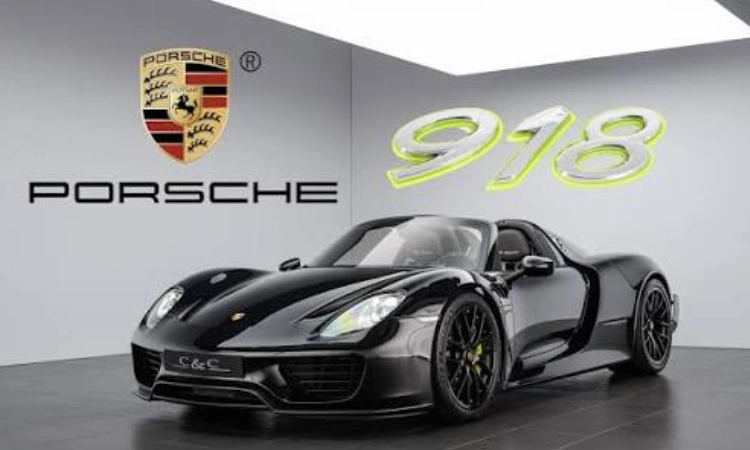
The Porsche 918 Spyder has a distinctive appearance shaped by aerodynamic requirements, mechanical packaging, and its open-top roadster configuration.
Its low nose, sculpted bodywork, and distinctive headlamps give the front end a clean, purposeful appearance. The rear is more dramatic, with muscular bodywork and centrally positioned exhaust outlets mounted high above the engine.
The high-mounted exhaust system is one of the car’s most recognisable features. It reflects the unusual arrangement of the V8 engine and helps distinguish the 918 Spyder from many other high-performance vehicles.
The removable roof panels can be stored in the front luggage compartment, allowing drivers to enjoy open-air motoring without permanently sacrificing the option of a closed cockpit.
Inside, the cabin combines premium materials with a driver-focused layout. Controls are arranged to provide access to the car’s different driving functions, while the seating position and visibility support its sports-car character.
The 918 Spyder’s design is not simply about visual impact. Its aerodynamic surfaces, lightweight structure, and carefully arranged mechanical components all contribute to its overall performance.
The Design and Development of the Hypercar
Creating the Porsche 918 Spyder required more than adapting an existing sports car. Porsche had to develop an integrated vehicle architecture that could accommodate a powerful V8 engine, two electric motors, a high-voltage battery, and an advanced all-wheel-drive system.
The challenge was to combine these systems without compromising the vehicle’s performance or handling.
Carbon-fibre construction played a major role in this process. Reducing structural weight helped offset the additional mass associated with the hybrid system, while the rigid monocoque provided a foundation for precise chassis tuning.
The production programme also required specialised manufacturing techniques. Because the 918 Spyder was produced in limited numbers, Porsche could devote considerable attention to individual assembly stages and quality checks.
This combination of engineering ambition and careful manufacturing helped establish the 918 Spyder as one of the defining hybrid hypercars of its generation.
A New Skill for the Former Paint Shop
Porsche transformed part of its existing production facilities at Zuffenhausen into a dedicated assembly area for the 918 Spyder.
The space was designed to support detailed, high-quality work rather than the pace of a conventional high-volume production line. Ergonomic workstations, organised component delivery, and clearly defined assembly procedures helped technicians work efficiently while maintaining close attention to detail.
The facility reflected the complexity of the car itself. Its hybrid powertrain, carbon-fibre structure, and advanced electronic systems required specialist knowledge and careful integration.
Porsche’s approach showed how an established manufacturer could use its existing industrial expertise to build a highly specialised, low-volume hypercar.
Production Using a Carefully Organised Assembly Process
Series production of the Porsche 918 Spyder began in September 2013. Before production cars reached customers, Porsche had already assembled prototypes and pilot vehicles to evaluate the manufacturing process and verify the vehicle’s systems.
The dedicated assembly area used a carefully organised sequence of workstations. Components were prepared and delivered to the relevant stations, helping reduce unnecessary movement and improve coordination between assembly stages.
The car progressed through multiple production and inspection stages before undergoing final checks. Testing helped verify the operation of its hybrid powertrain, electrical systems, chassis components, and other essential functions.
The production process illustrates an important point about specialist automotive manufacturing: exclusivity does not eliminate the need for efficiency. Even a limited-production hypercar benefits from an organised workflow, consistent quality standards, and close coordination between engineering and assembly teams.
Porsche 918 Spyder: Performance and Hybrid Technology
The 918 Spyder helped demonstrate that electrification could be used to improve a performance car’s acceleration, traction, and flexibility.
Its electric motors deliver torque quickly, while the naturally aspirated V8 supplies high-revving power. The combination supports strong acceleration and allows the car to operate in different modes according to the driver’s needs.
The all-wheel-drive system also contributes to traction by distributing power between the front and rear wheels. Together with the advanced suspension and lightweight structure, it helps the 918 Spyder deliver a composed driving experience at high speeds.
The car’s plug-in hybrid system also offered an electric-only driving mode, although the available range was limited by modern standards. Its original official fuel-consumption and emissions figures were based on the testing procedures used at the time and should not be directly compared with newer vehicles without considering differences in test methods.
The 918 Spyder’s lasting importance lies in how it combined electric assistance with a traditional high-performance engine, creating a vehicle that was both technologically advanced and emotionally engaging.
How the Porsche 918 Spyder Compares with Other Performance Cars
The Porsche 918 Spyder is one of the most notable examples of hybrid hypercar engineering. However, performance enthusiasts have many other types of vehicles to explore, each with a different approach to speed, design, and driving experience.
For a look at a different performance tradition, read our guide to the muscle car, a category often associated with powerful engines and strong straight-line acceleration.
Ferrari offers another perspective on high-performance engineering. Our overview of the Ferrari sports car range explores the Italian marque’s performance heritage, while our guide to the cheapest Ferrari models examines options for enthusiasts interested in Ferrari ownership at different price points.
Although these vehicles vary considerably in price, design, and technology, they share a focus on performance and the emotional appeal of driving.
Conclusion
The Porsche 918 Spyder remains one of the most significant hybrid hypercars of its generation. By combining a naturally aspirated V8 engine, two electric motors, all-wheel drive, and lightweight carbon-fibre construction, Porsche created a vehicle that demonstrated the potential of electrification in high-performance motoring.
Its limited production run of 918 examples, specialised assembly process, and motorsport-inspired engineering helped make it an important part of Porsche’s history.
More than a fast roadster, the 918 Spyder represents a successful combination of traditional performance engineering and emerging hybrid technology. Alongside the McLaren P1 and Ferrari LaFerrari, it helped define the hybrid hypercar era and continues to attract the attention of collectors and automotive enthusiasts worldwide.