

Table of Contents
Hindustan Ambassador Car – Explaining
Not too long ago, luxury in India was defined not by three-pointed stars or four rings but by a straightforward, rear-wheel-drive sedan: the Hindustan Ambassador. The Ambassador was not just a car for people who wanted to drive; it was also a vehicle associated with being chauffeured in comfort and style.
Many Ambassadors on Indian roads were chauffeur-driven, and the car quickly became a status symbol. Politicians, government officials, business leaders and celebrities frequently travelled in one. Its spacious cabin, distinctive shape and familiar presence made it one of the most recognisable cars in India’s automotive history.
Unlike modern luxury vehicles from manufacturers such as BMW, the Ambassador earned its reputation through practicality, durability and its strong connection with Indian public life.
Hindustan Ambassador Car’s India Return
The Hindustan Motors Ambassador is one of India’s most iconic and historically significant cars. Produced from 1958 until 2014, the Ambassador remained part of the country’s automotive landscape for decades.
For many years, owning an Ambassador represented success and social standing. It was widely used by politicians, government departments, businesses and taxi operators. Its generous interior space and robust construction made it particularly suitable for Indian roads.
However, towards the end of its production life, the Ambassador struggled to keep pace with changing customer expectations. Buyers increasingly preferred vehicles with modern technology, improved fuel efficiency, contemporary styling and additional comfort and safety features. Declining sales eventually led Hindustan Motors to discontinue production in 2014.
The possibility of an Ambassador revival has continued to attract interest because of the car’s cultural significance. Its name remains closely associated with an important chapter in India’s automotive development.
Origin of the Ambassador
The story of the Hindustan Ambassador begins with Hindustan Motors, established by B. M. Birla in 1942, before India’s independence.
In 1948, the company moved its automobile manufacturing operations to Uttarpara in West Bengal. Hindustan Motors initially produced vehicles under licence, drawing on international automotive designs and engineering.
In 1958, the company introduced the Ambassador, based on the Morris Oxford Series III. It followed the earlier Hindustan Landmaster, which was itself based on an earlier Morris Oxford design.
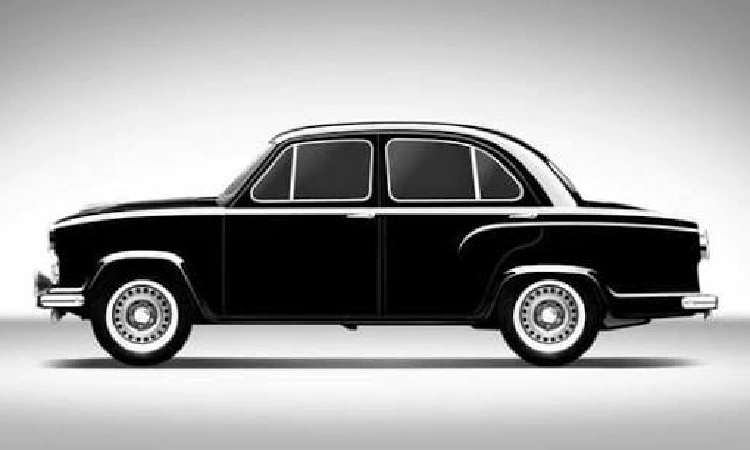
The Ambassador’s rounded body, spacious cabin and relatively simple mechanical construction helped establish its identity. Over time, it became a familiar sight across the country, from government offices and railway stations to family driveways and taxi stands.
The Ambassador was not the only historically significant car associated with India’s automotive industry. The Maruti 800 later transformed the small-car market by making personal car ownership more accessible to a broader range of Indian households.
The Hindustan Ambassador typically accommodated five passengers and was offered in several versions during its long production history. Engine options varied by model and year, including petrol and diesel variants, as well as alternative-fuel versions in certain applications.
Ambassador Specs, Features and Price
The Hindustan Ambassador’s specifications varied considerably depending on the model year, trim and engine. Different versions were offered with manual transmissions and a range of petrol and diesel powertrains.
Some variants featured engines of approximately 1.5 litres, while other versions used larger-capacity engines. Alternative-fuel configurations were also available in certain markets and applications.
Key characteristics of the Ambassador included:
- Seating capacity: Typically five occupants
- Body style: Four-door sedan
- Transmission: Manual, depending on variant
- Fuel options: Petrol and diesel, with alternative-fuel versions in some applications
- Design priorities: Cabin space, comfort, durability and straightforward mechanical construction
- Primary uses: Private ownership, government transport, chauffeur-driven travel and taxis
Because the Ambassador was produced over several decades, fuel economy, engine displacement, equipment and performance figures differ between variants. Anyone considering a used or restored example should check the exact model specifications rather than relying on a single set of figures for the entire range.
Top Things About the Ambassador’s India Revival
The Ambassador name returned to the spotlight when Hindustan Motors’ owner, the C. K. Birla Group, entered into a joint venture with French automotive manufacturer Groupe PSA, whose portfolio included brands such as Peugeot, Citroën and DS Automobiles.
In February 2017, Groupe PSA acquired the Ambassador brand from Hindustan Motors for a reported ₹80 crore. The transaction generated considerable interest because it raised the possibility that the iconic name might eventually return to the market.
The C. K. Birla Group and Groupe PSA also pursued plans connected with automotive manufacturing in India, including powertrain production facilities in Hosur, Tamil Nadu.
However, acquiring a brand name does not automatically mean that a new vehicle will be launched. Any revival would depend on product development, investment, manufacturing decisions, market demand and an official launch strategy.
For now, the Ambassador’s historical importance remains clear, even as the prospect of a modern successor continues to generate speculation among automotive enthusiasts.
Hindustan Motors’ Ambassador and Turbocharged Engines
The Ambassador’s traditional appeal came from its comfortable ride, distinctive design and relatively simple mechanical construction. Some enthusiasts have explored engine modifications and other upgrades to improve its performance.
Turbocharging can increase an engine’s power output, but it requires more than simply fitting a turbocharger. Engine condition, fuel delivery, cooling, lubrication, exhaust design and drivetrain strength must all be considered. Brakes, suspension and tyres also need to be suitable for any substantial increase in performance.
Older vehicles may require additional restoration work before modifications are attempted. A qualified specialist should assess the car’s condition and the suitability of any proposed changes.
Owners should also consider local regulations, emissions requirements and insurance implications before modifying a classic vehicle.
The Iconic Ambassador, or the Amby, That Continues to Grace Indian Roads
The Ambassador has experienced both the best and the most challenging periods in its long history, but few cars have such a recognisable place in Indian culture.
From serving as the official vehicle of politicians and bureaucrats to becoming a favourite among taxi operators, the Ambassador earned a reputation that went beyond its technical specifications.
Even today, classic-car enthusiasts appreciate the vehicle for its character, spacious cabin and connection with a different era of motoring. Driving an Ambassador can feel quite different from driving a modern luxury sedan, and that individuality is part of its lasting appeal.
The experience also highlights how much automotive design has changed. Modern cars offer increasingly sophisticated infotainment, driver-assistance technology, improved efficiency and advanced safety systems. Classic vehicles, by contrast, appeal to enthusiasts who value heritage, mechanical simplicity and distinctive design.
Another example of international automotive influence is the Fiat Tipo sedan, which illustrates how different manufacturers have developed sedans for changing customer needs and markets.
Conclusion
The Hindustan Ambassador remains one of India’s most recognisable automobiles. Its long production history, spacious design and association with public life made it much more than an ordinary family sedan. It became a symbol of an era in which a small number of locally produced cars dominated the Indian market.
Although production ended in 2014, the Ambassador continues to attract classic-car enthusiasts and people interested in India’s automotive heritage. The acquisition of its brand by Groupe PSA in 2017 renewed interest in a possible revival, although a purchase of the name alone does not guarantee a future launch.
Whether remembered as a government car, a family vehicle, a taxi or a collector’s classic, the Ambassador occupies a special place in Indian motoring history. Its legacy reflects how cars can become deeply connected with a country’s culture, changing aspirations and industrial development.