

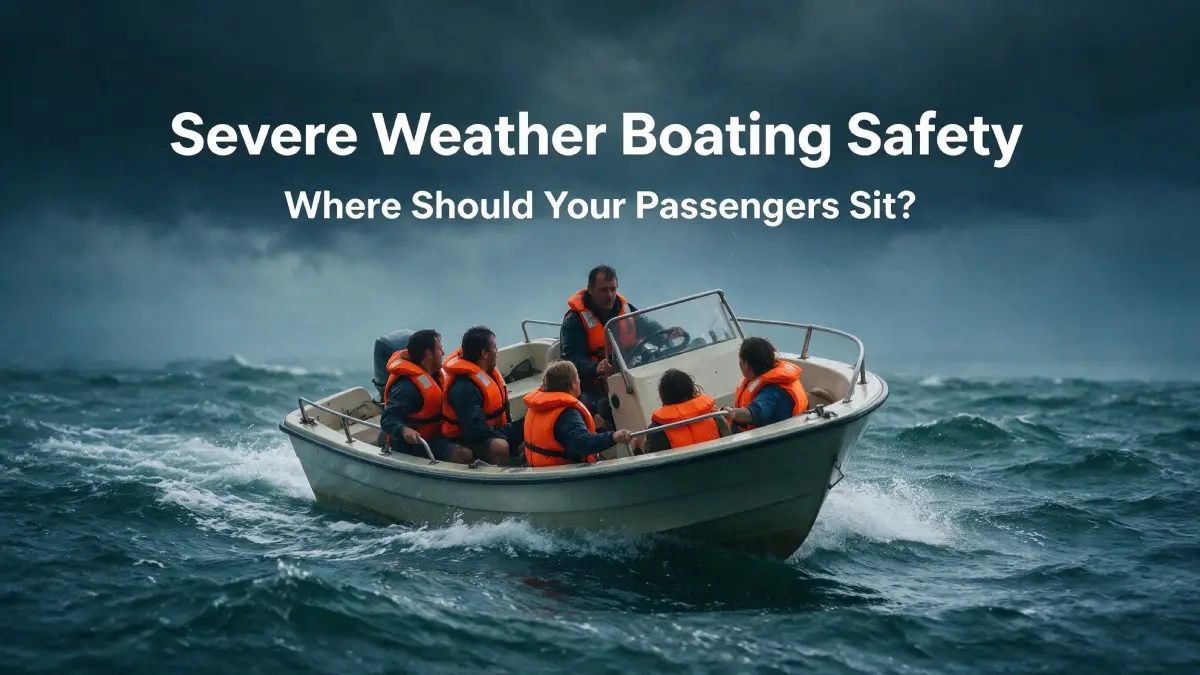
If severe weather catches you in your boat you’ll want to seat your passengers wisely to ensure their safety or exposure to harm. Good seating arrangement of passengers has a direct bearing on the stability of the boat, field of visibility and ease of accessibility of safety equipment during foul weather and must be a concern for all boaters preparing for emergencies.
Table of Contents
You’re Caught in Severe Weather While Boating: Where Should You Seat Your Passengers?
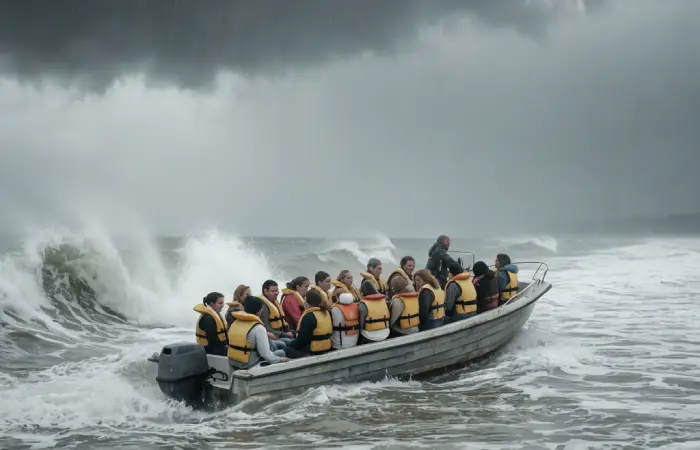
Bad weather can put a boat through its paces; in such trying conditions, where you seat your guests could be life-saving. Learning the basics of passenger distribution can make your boat much more stable, provide an unobstructed line of sight, and ensure you can get at your safety equipment fast if disaster strikes. Read this article to learn the safest way to seat your passengers when caught in nasty weather.
When you’re in the thick of a bad storm at sea, where you sit your passengers can be a matter of life and death. Seating is very important for stability, vision, and having access to your safety equipment in rough weather.
Understanding the Risks of Severe Weather While Boating
The weather offshore can turn very nasty very quickly and the storms at sea present the boaters with risks and situations far more complex and daunting than those that prevail at land during an storm. Boaters often may face sudden squalls, high winds, high seas or even lightning with very little notice. Any combination of these and the result may be greatly reduced visibility as well as a difficult boat to steer and thus may threaten to capsize or could result in people being ejected.
In situations like this, the buoyancy is as important as any other issue.
Inadequately distributing the weight aboard would make the vessel unstable. Panic will bring about instability and also that can be combated with, you guessed it: good communication.
Why Passenger Seating Matters in Rough Conditions
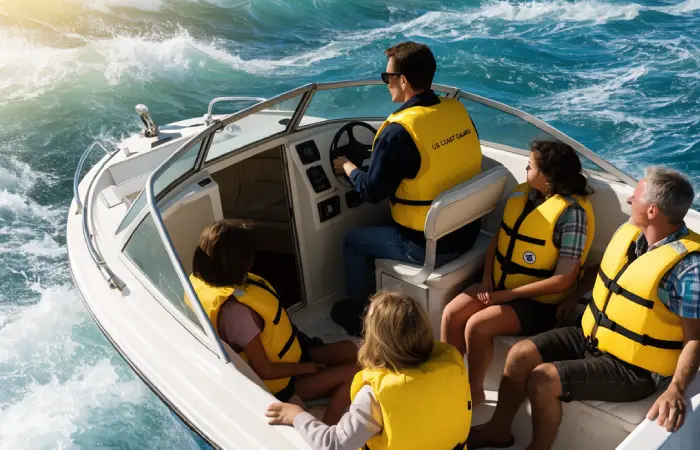
The way passengers are seated affects three critical aspects of boating safety during severe weather:
- Boat Stability – Proper weight distribution helps maintain the boat’s centre of gravity, reducing the risk of capsizing or excessive rolling.
- Visibility for the Captain – Passengers should not obstruct the captain’s view of the water, horizon, or navigational instruments.
3.Easy reach to safety equipment – In a time-sensitive emergency, every moment is crucial. Passenger’s need to be placed at a strategic spot where safety equipment, flares and life vests are readily available.
Furthermore, the occupants seated may also less probable bounced around the internal the sudden movements, thus, preventing them receiving damages from hitting the boat body as well as their peers.
Optimal Seating Positions for Different Boat Types
Not all boats handle severe weather the same way. The ideal seating arrangement depends on your vessel’s size, type, and design.
Small Boats (Dinghies, Small Motorboats)
For small boats, which are particularly vulnerable to rough conditions, the primary goal is to keep the centre of gravity as low as possible.
- Recommended Seating – Passengers should sit on the floor or the lowest seats available, close to the centreline of the boat.
- Weight Distribution – Evenly distribute passengers port and starboard (left and right) to prevent listing.
- Captain’s Position – The captain should remain at the helm but may need to adjust their position to maintain balance.
Medium-Sized Boats (Pontoons, Cabin Cruisers)
Medium-sized boats offer more flexibility but still require careful consideration of seating.
- Recommended Seating – Passengers should be seated in the middle of the boat, avoiding the bow (front) and stern (back) to prevent excessive pitching.
- Enclosed Areas – If the boat has a cabin, passengers should move inside to protect themselves from the elements and reduce wind resistance.
- Avoid High Seats – Passengers should not sit on elevated seats or the bow, as these positions increase the risk of being thrown overboard.
Large Boats (Yachts, Sailboats)
Larger boats are generally more stable but still require strategic seating during severe weather.
- Recommended Seating – Passengers should stay in the main cabin or below deck if possible. If they must remain on deck, they should sit low and near the centreline.
- Secure Positions – Use handrails or seat belts if available. On sailboats, passengers should avoid sitting near the boom or other moving parts.
- Captain’s Visibility – Ensure the captain has a clear view of the sails, water, and navigational aids.
Comparison Table: Optimal Seating by Boat Type
| Boat Type | Recommended Seating | Stability Impact | Visibility Impact | Safety Equipment Access |
| Small Boats | Low, central positions | High | Moderate | Immediate |
| Medium Boats | Middle, enclosed areas | Moderate | High | Easy |
| Large Boats | Cabin or low, central deck positions | Low | High | Easy |
Step-by-Step Workflow for Securing Passengers in Severe Weather
When severe weather strikes, follow this workflow to ensure passenger safety:
- Assess the Situation – Quickly evaluate the severity of the weather and your boat’s position relative to shore or shelter.
- Communicate Clearly – Inform all passengers about the situation and the actions they need to take.
- Don Life Jackets – Ensure everyone is wearing a properly fitted life jacket before moving.
- Reposition Passengers –
- Move all passengers to the lowest, most central part of the boat.
- Distribute weight evenly from side to side.
- Keep passengers away from the bow and stern.
- Secure Loose Items – Stow or secure any loose gear that could become a hazard in rough conditions.
- Reduce Speed – Slow down to maintain control and reduce the impact of waves.
- Monitor the Weather – Use your VHF radio or weather apps to stay updated on conditions.
- Head to Safety – If possible, navigate toward the nearest safe harbour or sheltered area.
Safety Equipment and Preparations
Proper seating is just one aspect of severe weather preparedness. Ensure your boat is equipped with the following:
- Life Jackets – One for each passenger, properly sized and in good condition.
- Throwable Flotation Devices – Such as life rings or cushions.
- Emergency Signaling Devices – Flares, whistle, or air horn.
- First Aid Kit – For treating injuries that may occur during rough conditions.
- VHF Radio – For communication with other boats or emergency services.
- Weather Monitoring Tools – Such as a barometer or weather radio.
Regularly check that all safety equipment is accessible and in working order. Conduct drills with your passengers so they know where to find and how to use these items.
According to the Royal National Lifeboat Institution (RNLI), wearing a life jacket can significantly increase your chances of survival in the event of an accident on the water. For more related articles visit our website
What to Avoid During Severe Weather
Avoid these common mistakes when caught in severe weather:
- Overloading One Side – Uneven weight distribution can cause the boat to list dangerously.
- High Seating Positions – Passengers should not sit on elevated seats, the bow, or any high point on the boat.
- Standing Up – Passengers should remain seated to avoid being thrown off balance.
- Panicking – Stay calm and follow your emergency plan. Panic can lead to poor decisions and increased risk.
- Ignoring Weather Warnings – Always check the forecast before heading out and monitor conditions while on the water.
Realistic Expectations: Managing Severe Weather at Sea
While proper seating and preparation significantly improve your chances of staying safe, it’s important to maintain realistic expectations. Severe weather can overwhelm even the most well-prepared boaters.
- Boat Limitations – Know your boat’s capabilities and limitations in rough conditions. Some boats are not designed to handle severe weather.
- Experience Matters – Inexperienced boaters should avoid venturing out in forecasted severe weather. If caught unexpectedly, prioritise safety over speed or destination.
- Seek Shelter – If possible, head to the nearest safe harbour or sheltered area. Do not attempt to “ride out” a severe storm unless you have no other option.
- Emergency Protocols – Ensure everyone on board knows basic emergency procedures, such as how to deploy a life raft or use a VHF radio.
The Maritime and Coastguard Agency (MCA) advises that boaters should always check weather forecasts and sea conditions before setting out, and be prepared to alter plans if conditions deteriorate.
Additional Considerations for Passenger Safety
Children and Elderly Passengers
- Children – Should be seated in the most stable, protected area of the boat. Ensure they are wearing properly fitted life jackets and are secured with a harness if available.
- Elderly Passengers – May have limited mobility. Seat them in easily accessible positions where they can hold onto secure handrails.
Pets on Board
If you’re boating with pets:
- Ensure they are wearing a pet life jacket.
- Secure them in a carrier or with a harness to prevent them from moving around uncontrollably.
- Keep them in a low, central position to maintain the boat’s stability.
Nighttime or Low-Visibility Conditions
Severe weather is even more dangerous at night or in low-visibility conditions:
- Ensure all navigation lights are functioning.
- Assign a passenger to help watch for hazards if visibility is poor.
- Move even more cautiously, as the risk of collision or running aground increases.
FAQ’s
Q: Where is the safest place to seat passengers when you are caught in severe weather while boating?
A: The safest place is in the lowest, most central part of the boat, with weight evenly distributed from side to side. Avoid the bow, stern, and any elevated positions.
Q: Should passengers wear life jackets even if the weather seems mild?
A: Yes, life jackets should be worn whenever there is a risk of severe weather or rough conditions. It’s much easier to put them on before conditions deteriorate.
Q: How does wind direction affect passenger seating?
A: In strong winds, it’s generally safer to seat passengers on the side opposite the wind (the leeward side) to reduce the effect of the wind on the boat’s stability.
Q: What should I do if a passenger is seasick during severe weather?
A: Seat them in a position where they can easily lean over the side if needed, but ensure they are still securely seated and wearing a life jacket. Provide a bag or bucket and reassure them.
Q: Can proper seating prevent capsizing?
A: While proper seating improves stability and reduces the risk of capsizing, it cannot guarantee prevention in extreme conditions. Always prioritise seeking shelter when possible.
Q: How often should I practice severe weather drills with my passengers?
A: It’s a good idea to conduct a safety briefing and drill at the beginning of each boating season, and whenever you have new passengers on board.
Conclusion
When caught in heavy weather while on board a boat, passenger position is extremely important to both the survival of your boat and your survival within the storm, you will minimize risks by knowing how to distribute weight, when visibility is paramount and access to emergency equipment cannot be delayed.
Most importantly however, remember preparation. No matter what the weather. Make sure you do research on any conditions that will prevail whilst you’re out.
If your passengers are unaware of your emergency procedures they will more than likelyPanic, make sure they are briefed before setting out.
Under severe storm conditions, stay as calm as you can and proceed according to your action plan, placing the safety of your crew above all other concerns.
When we’re on the water, boating can truly be a fantastic rewarding pastime. Nevertheless, boating requires us to remember that water and also the climate are really strong. If we check out the pointers in this short article, our company will make certain that our teamer all prepared for any type of conditions, in order to be certain that every travel, or voyage we go on, the sea is actually as pleasurable as its own secure.