

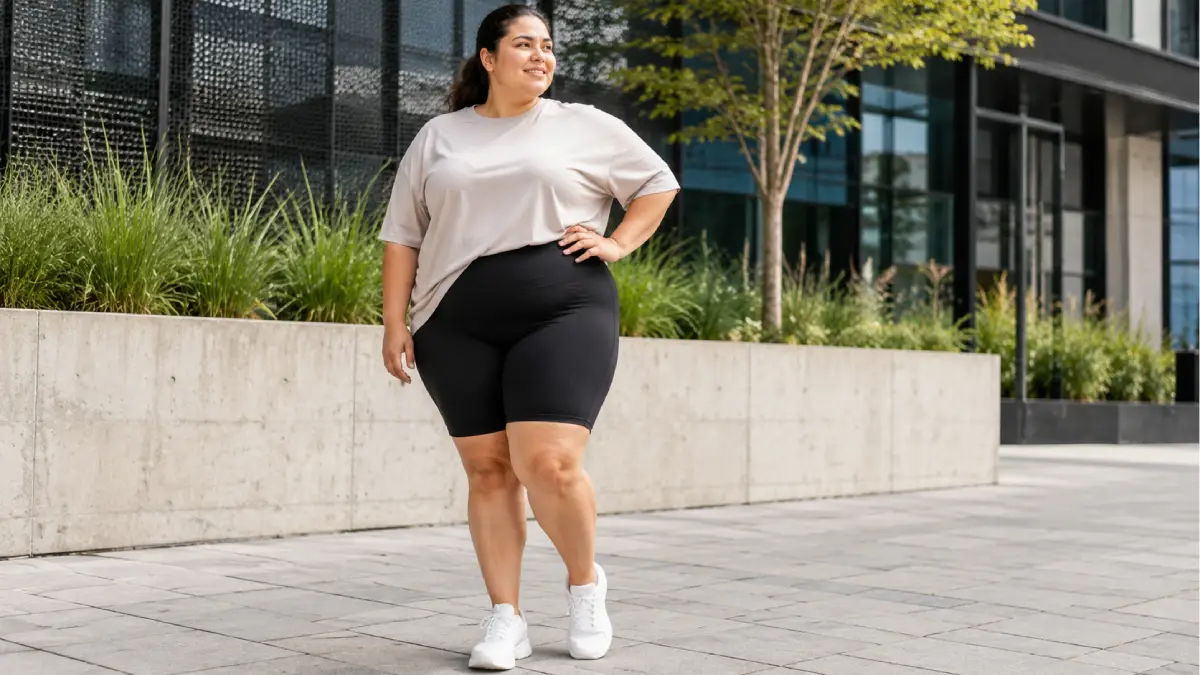
Plus size biker shorts can do more than simply have a size greater than your own. You will need shorts that fit your shape and suit your support preferences and activities. Bikers’ shorts are now being used for far more than riding and can be used for: gym sessions walking yoga traveling lounging and relaxing at home and as an outfit to casual go outside with the family.
The activewear ranges on the market these days also feature many different sizes, rise and inside leg and fit as well as having plus size ranges available too however not all biker shorts will function differently.
A lightweight pair for everyday wear are a whole lot different from a padded biker shorts you need when riding around for hours and hours.
Have a look at this when buying.
Table of Contents
What Are Plus Size Biker Shorts?
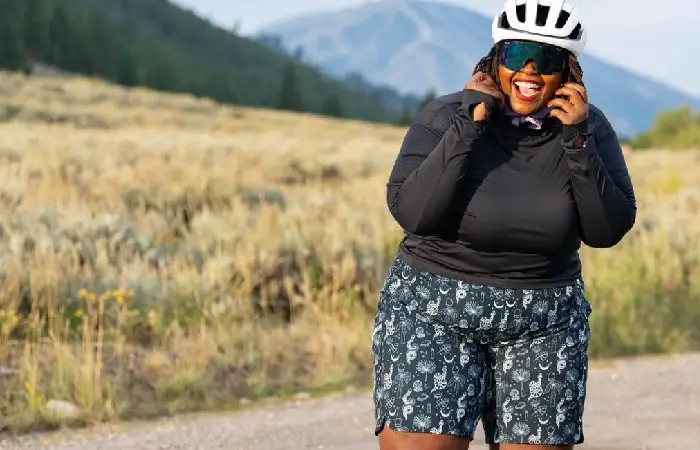
These are slim-fitting shorts that, in larger sizes, incorporate durable, flexible fabrics in their construction and are designed to provide ample coverage.
Plus size biker shorts are typically constructed with an elastane or spandex mixture fabric.
Depending on the design, biker shorts may feature:
- A high-rise waistband
- Different inseam lengths
- Four-way stretch
- Moisture-managing fabrics
- Side pockets
- Waistband pockets
- Flat or low-profile seams
- Light or firm compression
- Different levels of opacity
“Plus size” is not a generic size, the brands’ size varies in each company so the brand itself’s size chart could be useful than imagining that a size number will fit you in another store. For more related articles visit our website.
Why Are Plus Size Biker Shorts Popular?
One reason biker shorts have become popular is their versatility.
A single pair can work in several situations. You might wear them for a workout in the morning, use them for a walk during the afternoon and style them with an oversized shirt for a casual outfit later.
They also provide more thigh coverage than very short athletic shorts.
For some people, the longer leg can make movement more comfortable, particularly when sitting, walking or exercising.
Another practical advantage is that many modern designs include pockets. Current activewear listings show biker shorts with different lengths, rises and pocket configurations.
Still, popularity does not mean every style will suit everyone. Your intended use should guide the purchase.
How to Choose the Right Plus Size Biker Shorts
Choosing the right pair starts with fit rather than colour or appearance.
1. Check Your Measurements
Before ordering online, measure yourself according to the brand’s instructions.
The most useful measurements are usually:
- Waist
- Hips
- Sometimes thigh circumference
- Occasionally inseam
Your hip measurement can be particularly useful when comparing fitted shorts because the garment needs enough room to stretch across the hips and thighs without becoming excessively tight.
Do not assume that your usual clothing size will be identical across every brand.
2. Use the Brand’s Size Chart
Once you have your measurements, compare them with the individual product’s size chart.
This is more reliable than simply choosing “XL”, “2XL”, “3XL” or another label based on what you normally wear.
For example, two companies may use different measurements for the same letter or number size.
If your measurements fall between sizes, check the manufacturer’s guidance and consider how you want the shorts to fit.
For everyday wear, comfort may matter more than strong compression. For training, you may prefer a closer, more secure fit.
3. Choose the Right Inseam
Inseam is the measurement from the crotch area to the bottom of the leg.
Biker shorts are available in different lengths.
Shorter inseams can feel lighter and provide greater freedom around the knee.
Medium lengths offer a balance between coverage and mobility.
Longer inseams can provide additional thigh coverage and may be preferred by people who want more fabric between the upper thighs.
There is no single “correct” inseam for every person.
Think about what feels comfortable when you walk, sit, squat or exercise.
4. Consider the Waistband
The waistband can make a major difference to comfort.
A wide waistband can distribute pressure over a larger area rather than concentrating it in a narrow strip.
High-rise designs are particularly popular in women’s activewear, and current product ranges include many high-waisted biker-short styles.
When trying a pair, check whether the waistband:
- Rolls down when you bend
- Digs into your skin
- Moves during exercise
- Feels excessively tight
- Sits where you want it to sit
A waistband that stays in position without feeling restrictive is generally more useful than one that simply provides maximum compression.
5. Look at Fabric and Stretch
Fabric affects both comfort and performance.
Common materials used in activewear include polyester, nylon and elastane or spandex blends.
Stretch is important because fitted shorts need to accommodate movement without becoming uncomfortable.
For exercise, you may also prefer fabric designed to manage moisture.
For casual use, softness and breathability may be more important than high-performance features.
Instead of choosing based solely on a marketing phrase such as “premium fabric”, check the actual material composition and care instructions.
6. Decide Whether You Need Pockets
Pockets can be extremely useful, but they are not essential for everyone.
If you regularly walk, travel or exercise without a bag, a secure pocket may hold:
- Phone
- Key
- Card
- Small personal items
Side pockets are generally easier to access while standing or moving.
However, pocket placement can affect the way the shorts look and feel. A pocket that is too small may not securely hold a phone, while a heavy item can pull at lightweight fabric.
Think about what you actually carry before choosing a design.
7. Check Opacity and Construction
Opacity is particularly important with fitted clothing.
A fabric that looks opaque while standing may behave differently when stretched.
If possible, check customer photographs or product information for details about opacity. You can also perform a simple squat or stretch test when trying shorts at home, provided the retailer’s return policy allows it.
Also look at the seams.
Flat or low-profile seams can feel more comfortable during repeated movement because they may reduce areas where fabric edges rub against the skin.
Plus Size Biker Shorts vs Cycling Shorts
The terms “biker shorts” and “cycling shorts” are sometimes used interchangeably, but they can refer to different garments.
| Feature | Biker Shorts | Cycling Shorts |
| Main use | Casual wear, gym, walking and lifestyle | Cycling |
| Padding | Usually absent | Often includes a cycling chamois |
| Fit | Close-fitting | Close-fitting for riding |
| Pockets | Common in lifestyle styles | Depends on design |
| Waistband | Varies | Designed for riding position |
| Inseam | Various lengths | Often designed around riding comfort |
| Best choice | Everyday movement and activewear | Regular or longer cycling sessions |
If you are looking for shorts specifically for cycling, pay attention to whether they have a chamois pad.
A pair of unpadded fashion biker shorts should not automatically be treated as equivalent to purpose-built cycling shorts.
Likewise, padded cycling shorts may not be the most practical choice if your main goal is casual everyday wear.
Best Features to Look For
The ideal features depend on how you intend to use the shorts.
For Everyday Wear
Prioritise:
- Soft fabric
- Comfortable waistband
- Moderate stretch
- Suitable inseam
- Useful pockets
- Easy care
For Gym Training
Look for:
- Secure waistband
- Four-way stretch
- Breathable fabric
- Good opacity
- Comfortable seams
- Appropriate compression
For Walking
Consider:
- Comfortable inseam
- Lightweight fabric
- Secure waistband
- Pockets
- Breathability
For Cycling
Look for cycling-specific construction.
If you regularly spend significant time on a bicycle, consider purpose-built cycling shorts with an appropriate chamois rather than assuming standard biker shorts will provide the same support.
Are Plus Size Biker Shorts Good for Exercise?
They can be, depending on the construction and activity.
Biker shorts are commonly used for activities such as:
- Walking
- Gym training
- Yoga
- Strength training
- Indoor exercise
- Casual cycling
- Stretching
The key is to choose a pair designed for the activity.
For example, a casual cotton-rich pair may feel comfortable for daily wear but may not be the best option for a high-sweat workout.
Similarly, a very compressive performance pair may not be the most comfortable option for lounging.
Current activewear ranges demonstrate that biker-short designs are available for different activities, including training, running, yoga and lifestyle use.
Can You Wear Biker Shorts Casually?
Yes.
Biker shorts have become a common part of casual and athleisure outfits.
Some simple combinations include:
Oversized T-shirt + biker shorts + trainers
This is one of the easiest everyday combinations.
Long shirt + biker shorts + trainers
A longer shirt can provide additional coverage while keeping the outfit relaxed.
Hoodie + biker shorts + trainers
Useful for casual days, travel and informal errands.
Biker shorts + lightweight jacket
A jacket can make a simple activewear outfit look more structured.
The important thing is choosing a pair that feels comfortable and suits your personal style.
Advantages of Plus Size Biker Shorts
Comfortable Movement
Stretch fabrics allow the shorts to move with the body during many everyday activities.
More Thigh Coverage
Compared with very short shorts, biker shorts provide additional coverage around the upper leg.
Versatile
They can be used for exercise, walking, relaxing and casual outfits.
Pockets Can Add Convenience
Pocketed designs can reduce the need to carry a separate small bag for essentials.
Many Lengths Are Available
Different inseams allow shoppers to choose the amount of coverage they prefer.
High-Rise Options Are Widely Available
High-waisted styles are common across current women’s biker-short ranges.
Disadvantages to Consider
Biker shorts are not perfect for every situation.
They Can Feel Too Tight
A fitted garment that is too small may feel restrictive rather than supportive.
Waistbands Can Roll
Poor fit or unsuitable construction can cause the waistband to move during activity.
Some Fabrics May Be Too Warm
Fabric thickness and construction affect breathability.
Light Colours May Require Extra Attention
Opacity can become more noticeable when a fabric is stretched.
Fashion Biker Shorts May Not Suit Long Cycling
Without cycling-specific padding and construction, ordinary biker shorts may not provide the comfort required for extended rides.
Sizing Can Vary
A size that fits well from one company may not fit the same way from another.
Common Buying Mistakes
Choosing Only by Your Usual Size
Your normal clothing size is a useful starting point, but the individual size chart should come first.
Ignoring the Inseam
Two pairs can have very different levels of coverage even when both are labelled biker shorts.
Buying Maximum Compression
More compression is not automatically better.
The shorts should provide the level of support you actually need without becoming uncomfortable.
Forgetting About Fabric Opacity
Always consider what happens to the fabric when it stretches.
Assuming All Biker Shorts Are Cycling Shorts
If you are buying shorts for regular cycling, check whether they are specifically designed for that purpose.
Ignoring the Return Policy
Online shopping makes it difficult to judge fabric feel and fit before trying a garment.
A clear return policy can therefore be an important purchasing factor.
How to Care for Biker Shorts
Always follow the care instructions supplied with the garment.
Different fabrics and constructions can require different washing and drying methods.
Care labels exist to provide instructions for maintaining textile products. The US Federal Trade Commission’s Care Labeling Rule requires covered textile apparel manufacturers and importers to provide regular-care information.
As a general approach:
- Read the garment’s care label.
- Follow the recommended washing temperature.
- Use the recommended drying method.
- Avoid unnecessarily harsh treatment.
- Store the shorts clean and completely dry.
- Follow any specific instructions for elastic, printed designs or performance fabrics.
Do not assume that every pair should be washed in exactly the same way.
Comparison Tables / Useful Lists
Quick Feature Comparison
| Feature | Everyday Wear | Gym/Training | Cycling |
| Stretch | Important | Very important | Very important |
| Comfortable waistband | Essential | Essential | Essential |
| Pockets | Useful | Useful | Optional |
| Moisture management | Helpful | Important | Important |
| Compression | Optional | Personal preference | Depends on design |
| Chamois padding | Not needed | Not normally needed | Often useful |
| Longer inseam | Personal preference | Useful | Depends on riding style |
| Opacity | Important | Very important | Important |
Simple Buying Formula
Measure → Check size chart → Choose inseam → Check waistband → Check fabric → Check opacity → Check pockets → Check return policy
Quick Buying Checklist
Before purchasing plus size biker shorts, ask:
- Have I measured my waist and hips?
- Did I check the brand’s size chart?
- Is the inseam right for me?
- Does the waistband sit comfortably?
- Do I need compression?
- Is the fabric suitable for my activity?
- Is the fabric opaque enough?
- Do I need pockets?
- Are the seams comfortable?
- Are these designed for cycling if I plan to ride regularly?
- Have I checked the return policy?
- Have I checked the care instructions?
If you can answer these questions confidently, you are much less likely to choose a pair based purely on appearance.
What Should You Look for in Plus Size Biker Shorts?
The best pair is not necessarily the most expensive or the most heavily advertised.
Start with the basics: correct measurements, suitable fabric, a comfortable waistband and the right inseam.
Then consider additional features such as pockets, compression and moisture management.
For exercise, performance features can become more important. For casual wear, comfort and styling may matter more.
The current market includes everything from everyday lifestyle shorts to technical activewear, so there is no reason to treat all biker shorts as one category.
FAQs
What are plus size biker shorts?
Plus size biker shorts are fitted, stretchy shorts available in larger size ranges. They can be used for everyday outfits, walking, workouts and other activities, depending on their construction.
Are plus size biker shorts good for exercise?
Yes. Many are designed for activities such as gym training, yoga, walking and other forms of exercise. Choose fabric, stretch, waistband and compression according to your activity.
What size biker shorts should I buy?
Use your waist and hip measurements and compare them with the individual brand’s size chart. Do not rely only on the size you normally wear.
Are high-waisted biker shorts better?
Not necessarily. High-waisted styles can provide the coverage and waistband position some people prefer, but the best rise depends on your body measurements and personal comfort.
Are biker shorts the same as cycling shorts?
Not always. Many everyday biker shorts are unpadded, while cycling-specific shorts often include a chamois designed for riding comfort.
Are biker shorts good for preventing thigh rubbing?
A longer inseam can provide more coverage between the thighs, which some people may find more comfortable. However, the result depends on fit, fabric and individual preference.
Are plus size biker shorts available with pockets?
Yes. Current activewear ranges include plus-size and biker-short styles with pockets, although pocket size and placement vary by product.
How should biker shorts be washed?
Follow the care label attached to the garment. Care requirements can vary depending on the fabric and construction.
Final Thoughts
Plus size biker shorts can be a practical and versatile addition to an activewear wardrobe when the fit and construction match your needs.
The most important factors are not simply the size printed on the label. Pay attention to your measurements, the manufacturer’s size chart, inseam, waistband, fabric stretch, opacity, pockets and intended activity.
If you want everyday comfort, prioritise a secure but comfortable fit. If you are exercising, look for fabric and construction suited to movement. And if cycling is your main purpose, consider cycling-specific shorts rather than assuming every pair of biker shorts will provide the same support.
The best choice is ultimately the pair that fits your measurements, feels comfortable when you move and suits the way you actually plan to wear it.
For more related information, explore our guides to Fun Bike Centre, Costco Bikes, and Top Gungoose.