

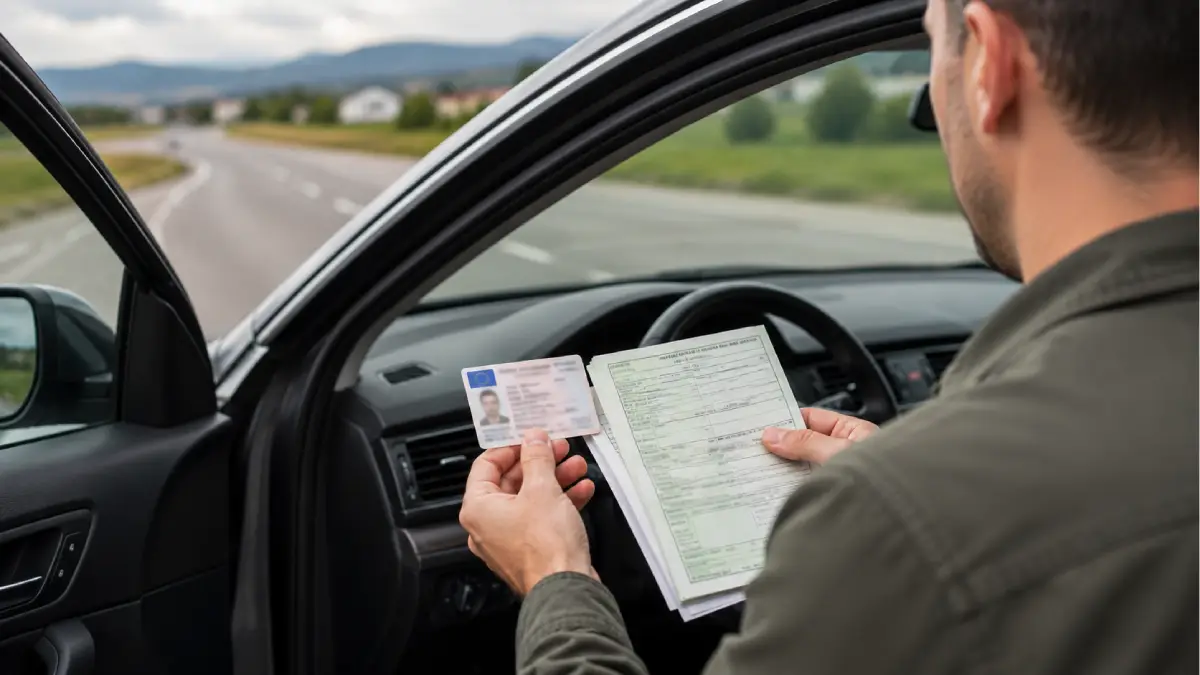
Rules governing authorisation to operate a vehicle can be somewhat convoluted in that varying documentation may be required depending upon the country, the vehicle and who is driving. For instance, for an individual driving their own car they might only need to be in possession of a valid driving licence plus the vehicle’s necessary documents, whereas, if the vehicle is not their own, then further documentation for such could be necessary depending upon where they reside.
This issue is highly relevant in Spain, where the Driver and Vehicle Administration (Direccin General de Trfico, DGT) issues and maintains the relevant documents for vehicles, and in Argentina, where amendments in vehicle documentation rules have modified the procedures for authorsing an authorized third party.
In this guide, we explain the main rules in simple language, including the Spanish permiso B, heavier vehicles, habitual drivers and the changes surrounding Argentina’s cédula azul.
Table of Contents
What Is Authorization for Driving Vehicles?
Authorization for driving vehicles generally means the legal permission or documentation that establishes that a person is allowed to drive a particular vehicle.
There are several different concepts that can be involved:
- A valid driving licence
- The vehicle’s registration documentation
- Permission from the vehicle owner
- Registration as a habitual driver
- Special authorisation for certain vehicle types
- Additional requirements for professional driving
These concepts should not be confused with each other.
For example, having permission from a vehicle owner does not automatically give someone the correct driving licence for a particular type of vehicle. Similarly, having a driving licence does not necessarily make someone the registered owner of the vehicle.
In Spain, the DGT defines different driving-licence categories according to the vehicles they authorise drivers to operate.
What Does the Driving Licence Authorise You to Drive?
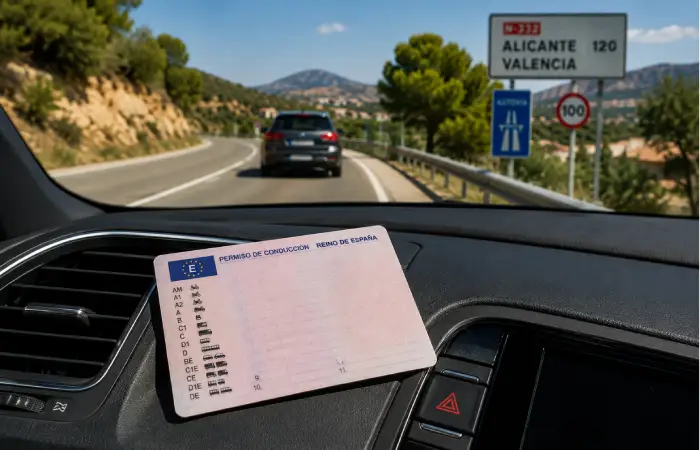
The driving licence category determines which vehicles you can legally drive.
For example, Spain’s B licence generally authorises the driver to operate vehicles with a maximum authorised mass (MMA) of no more than 3,500 kg and designed to carry no more than eight passengers in addition to the driver. The B category also covers certain combinations involving trailers, subject to the applicable weight limits.
For heavier vehicles, different licence categories apply.
The DGT states that the C1 licence covers vehicles with an MMA above 3,500 kg and up to 7,500 kg, while the C licence covers vehicles with an MMA above 3,500 kg, subject to the category’s other requirements.
This means that checking the vehicle’s maximum authorised mass is important before deciding which driving licence is required.
Can You Drive a Car Over 3,500 kg With a Category B Licence?
In general, a standard Spanish B licence is limited to vehicles with an MMA of 3,500 kg or less.
However, there is an important exception for certain alternative-fuel vehicles. According to the DGT, a B licence held for more than two years can authorise driving certain vehicles used for transporting goods with an MMA above 3,500 kg but not exceeding 4,250 kg, when the additional mass comes exclusively from the alternative propulsion system and the specified conditions are met.
This is different from simply driving any vehicle above 3,500 kg.
For a conventional vehicle exceeding the normal B-category limit, a different licence category may be required. For example, the C1 category covers vehicles above 3,500 kg up to 7,500 kg.
What About a Trailer?
A B licence can also cover certain vehicle-and-trailer combinations.
The DGT states that a B licence can cover a combination where the trailer has an MMA above 750 kg if the total MMA of the combination does not exceed 4,250 kg, subject to the applicable rules.
If the combination falls outside those limits, another authorisation or licence category may be necessary.
What Replaced the Cédula Azul?
This question relates to Argentina rather than Spain.
Argentina’s former cédula azul was used to document authorisation for another person to drive a vehicle belonging to someone else. The rules changed in 2024.
The Argentine government states that the cédula azul is no longer required as a document for circulation within the country. A person driving another person’s vehicle can use the vehicle’s cédula verde, including its digital version when available. Existing cédulas azules remain valid until they are revoked by the person who requested them.
The change was introduced through Disposición 29/2024, which also changed the rules governing vehicle identification documents. The regulation allows the registered owner to make their vehicle’s digital identification document visible to one or more designated third parties through the Mi Argentina system.
Is the Cédula Azul Completely Gone?
New cédulas azules are no longer necessary under the current Argentine circulation rules.
However, a cédula azul that was issued previously does not automatically become invalid. The official Argentine information states that existing cédulas remain valid until they are revoked by the person who requested them.
Therefore, it is useful to distinguish between:
| Document or system | Current situation |
| Cédula azul | No longer required for normal circulation |
| Existing cédula azul | Remains valid until revoked |
| Cédula verde | Continues as the vehicle identification document |
| Digital vehicle documentation | Available through the official digital system where applicable |
How Can I Add Another Person as the Regular Driver With the DGT?
In Spain, if another person regularly drives a vehicle registered in your name, you can communicate that person as the habitual driver to the DGT.
The DGT explains that a habitual driver is generally someone who will use the vehicle for a continuous period of more than 30 days. For rental vehicles, the minimum period can be three days.
This registration is useful because it can allow traffic-related notifications to be directed to the person who normally uses the vehicle rather than automatically being sent first to the registered owner.
Steps to Register a Habitual Driver
The process generally involves the following steps:
1. Obtain the driver’s consent
The vehicle owner should obtain express consent from the person who will be registered as the habitual driver.
The DGT indicates that the consent documentation should include information about when the driver begins using the vehicle. The designated driver must also have a valid licence appropriate for the vehicle.
2. Register the driver with the DGT
The owner can communicate the habitual driver through the available DGT channels, including online services, the miDGT app or in person.
3. Update the information when circumstances change
If the habitual driver’s period of use changes or ends, the relevant information should also be updated.
The DGT allows changes to the duration of the communication and provides a process for removing a habitual driver from the record.
Is Registering a Habitual Driver the Same as Transferring Ownership?
No.
Registering someone as a habitual driver does not transfer ownership of the vehicle.
The registered owner remains the owner. The purpose of the habitual-driver record is mainly to identify the person who normally uses the vehicle and facilitate the handling of certain traffic notifications.
Driving Someone Else’s Vehicle in Spain
If you are borrowing a friend’s, family member’s or another person’s vehicle in Spain, you should make sure that you have:
- A valid driving licence
- The correct licence category for the vehicle
- Permission from the vehicle owner
- The vehicle’s required documentation
- Valid insurance and other legally required requirements
The exact documentation needed can depend on the circumstances.
If another person uses your vehicle regularly, registering them as a habitual driver with the DGT can be useful.
Special Authorisations for Heavier or Exceptional Vehicles
Not every vehicle-related authorisation concerns the driver’s licence.
Some vehicles or vehicle combinations can require additional circulation authorisations because of their dimensions or weight.
For example, the DGT explains that vehicles exceeding the maximum authorised mass or dimensions established under the applicable regulations may need an Autorización Complementaria de Circulación (ACC) in appropriate circumstances.
This type of authorisation is different from a driving licence.
A driving licence determines whether the person is qualified to drive a particular category of vehicle, while a circulation authorisation can concern whether a particular vehicle or vehicle combination is allowed to travel under exceptional weight or dimension conditions.
Why Vehicle Weight Matters
Vehicle weight is one of the most important factors when determining the correct driving category.
The MMA (Masa Máxima Autorizada) refers to the maximum weight at which the vehicle is authorised to circulate, including the relevant vehicle load. The DGT uses MMA as part of the classification of vehicles and driving-licence categories.
For this reason, drivers should check the vehicle documentation rather than estimating the vehicle’s weight by appearance.
A large van, motorhome or commercial vehicle may look similar to a normal passenger vehicle but have a different MMA that affects the required licence.
Driving Authorisation for Professional Drivers
Professional driving can involve additional requirements beyond simply holding the appropriate licence.
The DGT notes that professional drivers operating vehicles covered by the C1, C1+E, C or C+E categories must also meet applicable requirements concerning initial qualification and continuing training for road transport.
This is particularly important for people driving commercial vehicles as part of their employment.
Before starting professional driving work, check both the licence category and any professional qualification requirements that apply to the specific activity.
Common Mistakes About Vehicle Driving Authorisation
Confusing ownership with permission to drive
Owning a vehicle and being authorised to drive it are different concepts.
Assuming a B licence covers every car
A B licence has weight and passenger limits. Vehicles exceeding those limits may require another category.
Treating the cédula azul as a Spanish document
The cédula azul question belongs to Argentina’s vehicle-document system. Spain uses a different framework administered by the DGT.
Ignoring the vehicle’s MMA
Always check the official vehicle documentation instead of relying on the vehicle’s appearance or empty weight.
Forgetting to update a habitual-driver record
If the regular driver changes or stops using the vehicle, the information should be updated with the DGT.
Documents to Check Before Driving
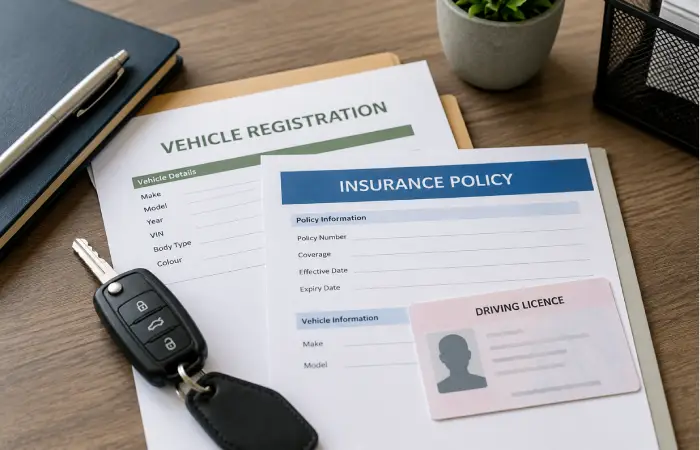
Before using a vehicle, it is sensible to check the following:
| Item | Why it matters |
| Driving licence | Confirms that you can drive the vehicle category |
| Vehicle documentation | Identifies the vehicle and its registered details |
| Insurance | Confirms the required insurance coverage |
| ITV where applicable | Confirms the vehicle’s inspection status |
| Owner’s permission | Important when driving a vehicle you do not own |
| Habitual-driver registration | Useful when another person regularly uses a Spanish-registered vehicle |
Requirements can vary according to the country and the vehicle, so official government information should be checked when there is any doubt.
Frequently Asked Questions
What is authorization for driving vehicles?
It refers generally to the legal permission or documentation that allows a person to drive a vehicle. The exact requirements depend on the country, vehicle category and driver’s circumstances.
Can a B licence drive a vehicle over 3,500 kg in Spain?
Normally, the B licence covers vehicles with an MMA of no more than 3,500 kg. However, certain alternative-fuel vehicles can fall under a specific exception up to 4,250 kg when the DGT’s conditions are met.
What licence is normally required for a vehicle above 3,500 kg?
The appropriate category depends on the vehicle. In Spain, C1 covers vehicles above 3,500 kg and up to 7,500 kg, while C covers vehicles above 3,500 kg subject to its requirements.
What replaced the cédula azul in Argentina?
Argentina no longer requires the cédula azul for normal circulation. The vehicle’s cédula verde, including its digital form where available, is used under the current rules. Previously issued cédulas azules remain valid until revoked.
How do I register another person as the habitual driver with the DGT?
The vehicle owner can communicate the habitual driver to the DGT through its available online services, the miDGT app or in person. The habitual driver generally needs to use the vehicle for more than 30 continuous days and must have the appropriate valid driving licence.
Is a habitual driver the same as the vehicle owner?
No. A habitual driver is the person who regularly uses the vehicle, while ownership remains with the registered owner.
Conclusion
Understanding authorization for driving vehicles starts with identifying the country, vehicle type and driver’s role.
In Spain, the DGT’s driving-licence categories determine which vehicles a driver can operate. A standard B licence generally covers vehicles up to 3,500 kg, with specific exceptions for certain alternative-fuel vehicles. Heavier vehicles may require C1 or C-category permissions.
For vehicles regularly driven by someone other than the owner, Spain also provides a habitual-driver registration system through the DGT.
In Argentina, meanwhile, the former cédula azul is no longer required for normal circulation, following the 2024 changes to vehicle documentation.
Because driving regulations can change, readers should always confirm their specific situation through the relevant official traffic authority before driving.