

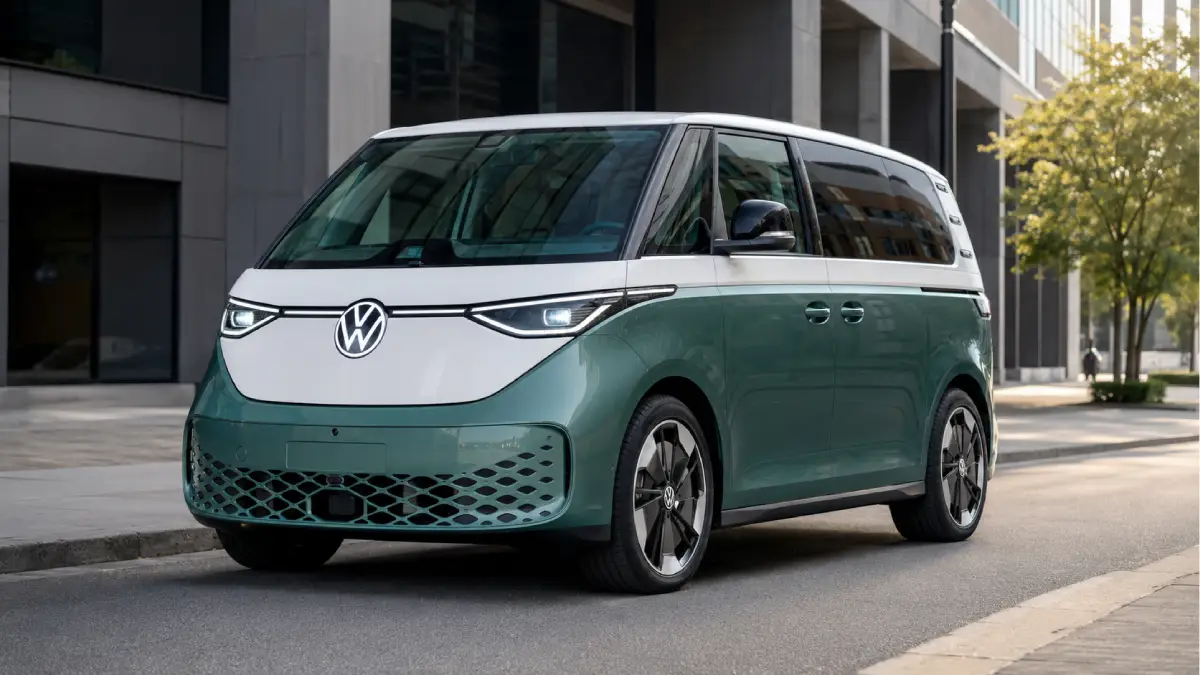
Volkswagen’s 2025 ID. Buzz takes one of its most iconic vehicle shapes and gives it an electric makeover. This isn’t a van attempting to look like anything else.
The ID.
Buzz embraced its shape and blended classic design cues with EV technology, a huge interior, and versatile seating for people of all sizes. For its price, VW lists the 2025 ID. Buzz as starting at $59,995. Depending on how you spec it, it can hold six to 7 occupants and drive between 231-234 miles on one charge thanks to its EPA range.
While the ID.
Buzz’s unique exterior shape turns head; this isn’t just about look. The van has lots of cargo room, quick DC fast charging, optional AWD, and even kid-friendly packaging options making it an ideal van alternate Ble to gas-powered options.
Table of Contents
What Is the 2025 Volkswagen ID. Buzz?
The 2025 Volkswagen ID. Buzz is the all-electric passenger van from Volkswagen’s ID domestic of EVs that receipts fashioning signals from the original VW Bus but is engineered on an electric vehicle foundation utilizing a completely new, and more modern, platform.
The exterior features a short front end, upright proportions, large windows, sliding doors and the familiar illuminated Volkswagen logo. Two-tone paint options further strengthen the connection with Volkswagen’s historic bus design.
Unlike many electric vehicles that focus primarily on sporty styling, the ID. Buzz places a strong emphasis on practicality. Volkswagen says the vehicle provides more than 160 cubic feet of passenger space and can offer up to 145.5 cubic feet of cargo capacity with the second row folded and third row removed.
2025 Volkswagen ID. Buzz Price
Wolfsburg. If Volkswagen’s stated base prices mean anything in the real world in terms of what the manufacturer expects the vehicle will command from consumers, it appears the 2025 Volkswagen ID. Buzz will cost $59,995 in the United States, according to that company. Keep in mind, that price can change given trim level, drivetrain configuration, additional equipment, destination fees, taxes and more.
Configuration details consist of rear-wheel-drive types, as well as a choice of the 4MOTION all-wheel drive configuration.
In the case of a buyer of an ID. Buzz the purchase price needs to be considered at the same time as the charging needs, as well as any other running costs and of course, access to a charging location.
2025 Volkswagen ID. Buzz Specifications
| Specification | 2025 ID. Buzz |
| Vehicle type | All-electric van |
| Starting MSRP | $59,995 |
| Seating | 6 or 7 passengers |
| EPA-estimated range | 231–234 miles |
| Drive options | RWD / available 4MOTION AWD |
| Transmission | Single-speed electric drive |
| DC fast charging | Up to 200 kW |
| 10–80% DC charging | As little as 26 minutes |
| Cargo capacity | Up to 145.5 cu. ft. with specified seats removed/folded |
| 0–60 mph | Around 6 seconds with available 4MOTION |
Specifications can vary according to trim and equipment. Volkswagen’s official US information confirms the 231–234-mile EPA range and 26-minute 10–80% DC fast-charging estimate.
Electric Motor and Performance
The ID. Buzz uses an electric drivetrain rather than a conventional petrol or diesel engine.
The rear-wheel-drive configuration is designed around a single electric motor, while the available 4MOTION system adds all-wheel drive. Volkswagen states that the available 4MOTION model can accelerate from 0 to 60 mph in about six seconds.
This makes the ID. Buzz more capable than its relaxed, retro appearance might suggest.
The instant torque of an electric motor is particularly useful in a large vehicle because it can provide smooth acceleration without the gear changes associated with a conventional automatic transmission.
2025 Volkswagen ID. Buzz Range
Range is one of the most important considerations when buying an electric vehicle.
According to Volkswagen’s US specifications, the 2025 ID. Buzz has an EPA-estimated range of 231 to 234 miles per charge, depending on configuration and driving conditions.
Actual range can vary considerably. Factors such as:
- Driving speed
- Outside temperature
- Road conditions
- Passenger and cargo weight
- Heating or air-conditioning use
- Tyre condition
- Driving style
can all affect energy consumption.
The ID. Buzz’s range is therefore best viewed as an official testing estimate rather than a guaranteed distance for every journey.
Charging the 2025 Volkswagen ID. Buzz
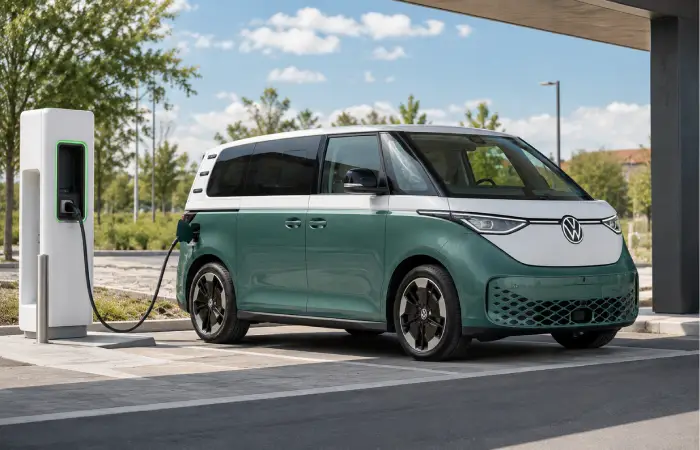
Charging is another major advantage of the ID. Buzz.
Volkswagen states that the 2025 model can charge from 10% to 80% in as little as 26 minutes when connected to a suitable 200 kW DC fast charger.
For home charging, Volkswagen gives an approximate charging time of up to nine hours from empty using a 240-volt, 11 kW Level 2 charger.
The practical difference is straightforward:
Home charging: Better for overnight or routine charging.
DC fast charging: Better for longer journeys when you need to add a significant amount of energy quickly.
Readers new to electric vehicles can also learn more about the basics in our guide to EV charging.
Interior and Passenger Space
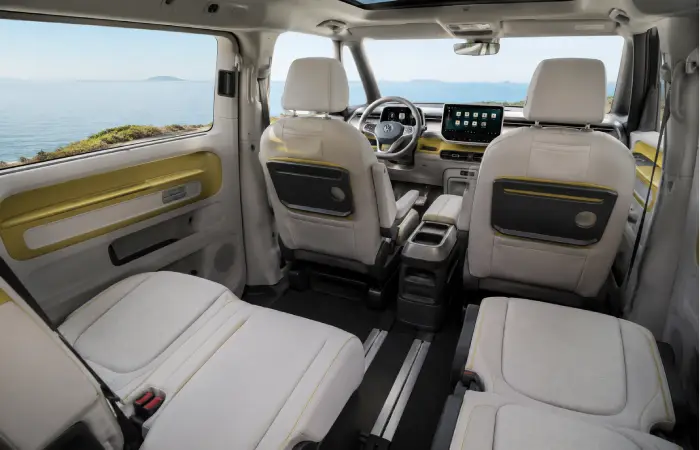
Interior space is one of the strongest reasons to consider the ID. Buzz.
Depending on the trim, the 2025 model accommodates six or seven passengers. The Pro S uses a second-row bench to provide seven seats, while the First Edition and Pro S Plus use second-row captain’s chairs and seat six people.
The cabin’s upright design helps create a spacious environment for passengers. Volkswagen also highlights generous third-row legroom, making the rear seats more practical than they might be in a smaller crossover.
For families, this configuration can be particularly useful because passengers do not have to sacrifice as much space simply because the vehicle has three rows.
Cargo Space and Practicality
The ID. Buzz is designed to function as both a passenger vehicle and a flexible cargo carrier.
Volkswagen lists up to 145.5 cubic feet of cargo capacity when the second row is folded and the removable third row is taken out.
This makes the vehicle suitable for situations such as:
- Family road trips
- Airport journeys
- Carrying sports equipment
- Moving larger household items
- Weekend travel
- Outdoor activities
The sliding doors are another practical feature, particularly in crowded parking areas where conventional rear doors can be difficult to open.
Exterior Design
The design is probably the first thing most people notice about the 2025 Volkswagen ID. Buzz.
Its styling references the classic Volkswagen Bus without simply copying the original vehicle. The modern version includes an illuminated Volkswagen logo, a horizontal front light signature and available two-tone exterior colours.
The result is a vehicle that looks considerably different from most electric SUVs currently on the market.
This distinctive styling could be an advantage for buyers who want an EV with a strong visual identity rather than a conventional-looking electric vehicle.
Technology and Connectivity
The ID. Buzz combines its retro-inspired exterior with modern digital technology.
Volkswagen lists features such as wireless App-Connect, wireless smartphone charging, connected vehicle services, Wi-Fi hotspot capability and enhanced voice control.
Depending on equipment, buyers can also access Volkswagen’s driver-assistance technologies and IQ.DRIVE features.
As with other modern connected vehicles, some services depend on cellular connectivity, subscriptions, compatible equipment or specific trim levels. Buyers should therefore check exactly what is included with the vehicle they are considering.
Safety and Driver Assistance
The 2025 ID. Buzz includes a range of driver-assistance and safety technologies.
Available systems can help with tasks such as maintaining lane position, monitoring surrounding traffic and assisting the driver in certain situations.
However, these systems are designed as driver aids rather than replacements for an attentive driver. Volkswagen specifically notes that driver-assistance features do not substitute for attentive driving.
2025 Volkswagen ID. Buzz: Pros and Cons
| Pros | Cons |
| Distinctive retro-modern styling | Relatively large exterior footprint |
| Spacious interior | Range is lower than some long-range EVs |
| Six- or seven-seat configurations | Higher starting price than many mainstream EVs |
| Strong cargo flexibility | Large battery and vehicle size can affect efficiency |
| Available 4MOTION AWD | Charging access remains important for road trips |
| Fast DC charging capability | Not every feature is standard on every trim |
Is the 2025 Volkswagen ID. Buzz Good for Families?
The ID. Buzz makes a strong case for families that prioritise space.
Its available seven-seat configuration, generous passenger room, sliding doors and flexible cargo area give it several practical advantages over smaller electric SUVs.
The vehicle can also make sense for families who regularly travel with several passengers or carry bulky equipment.
However, buyers should consider whether they actually need the ID. Buzz’s large interior. A smaller electric crossover may be easier to park and less expensive if maximum passenger and cargo capacity are not important.
Is the ID. Buzz Good for Long Road Trips?
The ID. Buzz can be used for road trips, but planning is more important than it is with many petrol vehicles.
Its official EPA range of 231–234 miles provides a reasonable starting point for journey planning, while DC fast charging can add substantial range relatively quickly. Volkswagen estimates a 10–80% charge in as little as 26 minutes under suitable conditions.
For longer journeys, drivers should plan charging stops around available fast chargers rather than relying solely on the vehicle’s maximum range.
Weather, speed and cabin climate control can also reduce real-world range.
How Does the ID. Buzz Compare With Conventional Vans?
The biggest difference is the powertrain.
A conventional van uses an internal-combustion engine and needs petrol or diesel, while the ID. Buzz uses an electric drivetrain and must be recharged.
The ID. Buzz can also provide the smooth and quiet driving experience associated with electric vehicles.
On the other hand, conventional vans can still have an advantage for drivers who frequently travel long distances through areas with limited charging infrastructure.
The right choice therefore depends heavily on driving habits and local charging availability.
Who Should Consider the 2025 Volkswagen ID. Buzz?
The ID. Buzz could be particularly appealing to:
- Families needing three-row seating
- Buyers who want an electric people carrier
- Drivers who value distinctive styling
- EV owners who regularly charge at home
- People who need flexible passenger and cargo space
- Buyers interested in an electric alternative to traditional vans
It may be less suitable for buyers who prioritise maximum driving range, a compact exterior or the lowest possible purchase price.
Frequently Asked Questions
What is the price of the 2025 Volkswagen ID. Buzz?
Volkswagen lists a starting MSRP of $59,995 for the 2025 ID. Buzz in the US. Final pricing varies according to trim, options and additional charges.
How far can the 2025 Volkswagen ID. Buzz travel?
The EPA-estimated range is 231 to 234 miles per charge, depending on configuration and driving conditions.
How many people can the ID. Buzz seat?
The 2025 ID. Buzz seats six or seven passengers, depending on the trim and seating configuration.
How long does the ID. Buzz take to charge?
With suitable 200 kW DC fast charging, Volkswagen estimates that the 2025 ID. Buzz can charge from 10% to 80% in as little as 26 minutes.
Does the 2025 ID. Buzz have all-wheel drive?
Yes. The 2025 ID. Buzz is available with Volkswagen’s 4MOTION all-wheel-drive system.
Is the Volkswagen ID. Buzz fully electric?
Yes. The ID. Buzz is an all-electric vehicle and does not use a conventional petrol or diesel engine.
Final Thoughts
The 2025 Volkswagen ID. Buzz is one of the more distinctive electric vehicles available in the US market. Its combination of retro-inspired styling, a spacious cabin, flexible seating and electric power gives it a character that many conventional EVs lack.
With an EPA-estimated range of 231–234 miles, available 4MOTION all-wheel drive and DC fast charging that can take the battery from 10% to 80% in as little as 26 minutes, it offers a useful combination of practicality and modern EV technology.
Its biggest appeal, however, may be its overall concept. The ID. Buzz is not simply an electric version of an ordinary van. The mix of VW’s heritage Bus design with the modern-day need for an electric family carrier vehicle is here.
It must be seriously considered for any one with the need for vast space and looking for something different.