

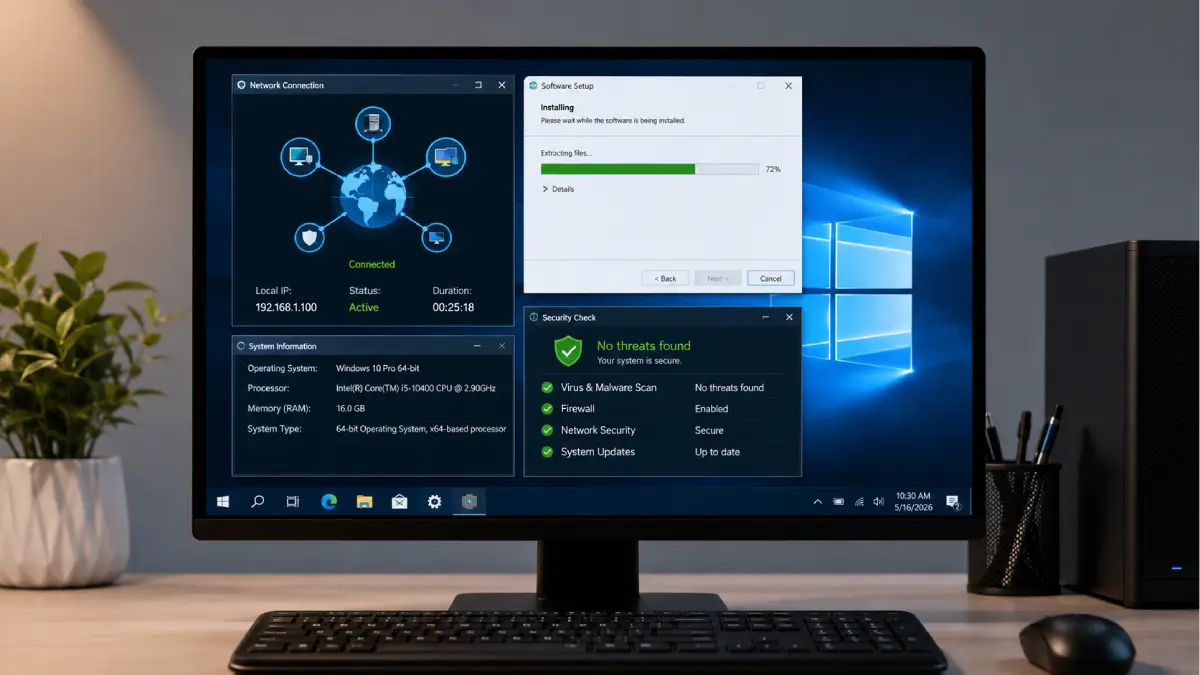
If you have typed freeDoor2.4.6.8 PC in to your search engine it is more than likely that you would like to clarify: what is this software, will it work on a Windows computer, how do you install it, is it safe to download, etc. There are not clearly specified documents and mainstream Windows applications by this name, descriptions of FreeDoor2.4.6.8 on the web differs significantly. As you are not aware of the true meaning behindFreeDoor2.4.6.8 PC you should investigate rather than just download the first executable file that you see, this document will look at, what are we dealing with when we see “FreeDoor2.4.6.8 PC,” and how we should assess the program, followed by installation details; possible drawbacks to the software and an important safety test.
Table of Contents
What Is FreeDoor2.4.6.8 PC?
FreeDoor 2.4.6.8 PC FreeDoor 2.4.6.8 PC does appear to be a version, or build number, of a piece of software that is known as FreeDoor version 2.4.6.8. Unfortunately, FreeDoor 2.4.6.8 PCs has become quite difficult to find details of, and its publisher, real use and where to obtain official versions are unclear.
Depending on the source, FreeDoor has been associated with network-related functionality and other PC utilities. Because these descriptions do not consistently agree, users should avoid assuming that every website offering a file with this name is distributing the same software.
The version number is also worth noting. A number such as 2.4.6.8 can represent a software release, build number or an identifier used by a particular distribution. Without reliable publisher documentation, the version number alone does not prove authenticity.
How FreeDoor2.4.6.8 Is Described Online
Search results for FreeDoor2.4.6.8 can lead to different explanations of what the program does. Some descriptions present it as a networking or proxy-oriented utility, while other pages attach broader capabilities to the name.
This creates an important distinction between information found online and verified software documentation.
Before relying on any claimed feature, check:
- Who developed the application?
- Does the publisher have an official website?
- Is version 2.4.6.8 listed by the publisher?
- Where is the installer hosted?
- Is the file digitally signed?
- Does the download match the publisher’s checksum?
- Does Windows Defender or another reputable security tool flag it?
- Does the application request unusual permissions?
These checks are particularly important when the software is distributed through third-party download websites.
Key Features of FreeDoor2.4.6.8
Because authoritative documentation for this specific version is limited, it is better not to treat every online feature claim as confirmed.
If you are evaluating a FreeDoor2.4.6.8 installation, look for documentation covering the following areas.
Network Functionality
If the particular FreeDoor build you have encountered is intended for networking or proxy-related use, its documentation should clearly explain how connections are handled.
Look for information about supported protocols, connection configuration, ports, authentication and traffic handling.
Configuration Options
Legitimate software normally provides understandable configuration options rather than requiring users to modify Windows system files or disable security protections.
Check whether the program provides:
- Connection settings
- Proxy settings
- Startup preferences
- Logging options
- Update controls
- Configuration files
- Error reporting
Windows Compatibility
A genuine Windows application should identify which versions of Windows it supports.
Do not assume that an installer will work correctly simply because its filename contains “PC” or “Windows”. Older software can have compatibility problems with modern Windows releases.
FreeDoor2.4.6.8 PC System Requirements
There does not appear to be a consistently verified official system-requirements document for this specific version.
Before installing it, check the information supplied with the original software package. At minimum, confirm:
| Requirement | What to Check |
| Operating system | Supported Windows version |
| Processor | Minimum CPU requirement |
| RAM | Required memory |
| Storage | Installer and application size |
| Architecture | 32-bit or 64-bit compatibility |
| Internet | Whether an active connection is required |
| Permissions | Administrator access requirements |
If a third-party website provides system requirements but does not identify the original publisher, treat those specifications as unverified.
How to Install FreeDoor2.4.6.8 on Windows
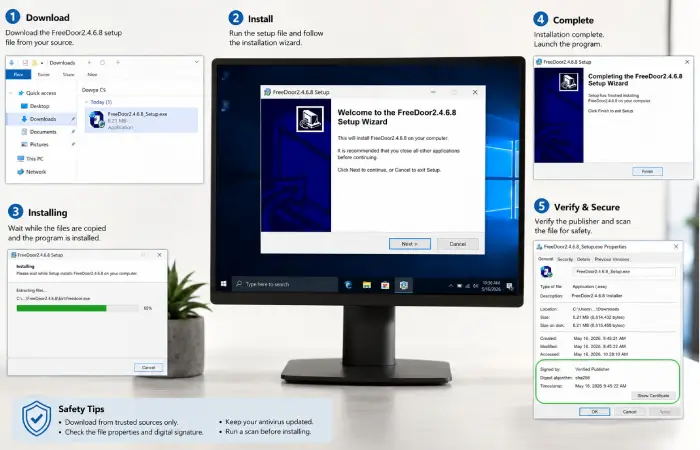
If you have obtained a legitimate installer from a trustworthy source, use a cautious installation process.
Step 1: Verify the Download Source
Before opening the installer, establish where it came from.
The safest option is an official publisher website or a reputable software distribution channel. Avoid files hosted through suspicious pop-ups, URL shorteners, unsolicited advertisements or pages that force several download buttons.
Step 2: Check the File
Right-click the downloaded executable and inspect its properties.
Look for:
- Publisher information
- Digital signature
- File size
- Creation details
- Version information
A missing publisher signature does not automatically prove that a file is malicious, but it is a reason for additional caution.
Step 3: Scan the Installer
Run the file through your installed security software before launching it.
Windows Security can also be used to scan downloaded files. An additional multi-engine scanning service may provide another layer of verification.
Step 4: Start the Installation
If the file passes your checks and comes from a trustworthy source, open the installer.
Read each installation screen carefully. Pay attention to optional software, browser extensions, changed homepage settings or other bundled components.
Step 5: Review Permissions
If an installer unexpectedly requests extensive administrator privileges, network permissions or access to unrelated personal files, stop and investigate why those permissions are required.
Step 6: Test the Application
After installation, open the application and check whether its interface and features correspond with the documentation you were expecting.
If the program behaves differently from the description or starts displaying unexpected advertisements, pop-ups or system changes, consider uninstalling it.
How to Check a Free Door Download Before Running It
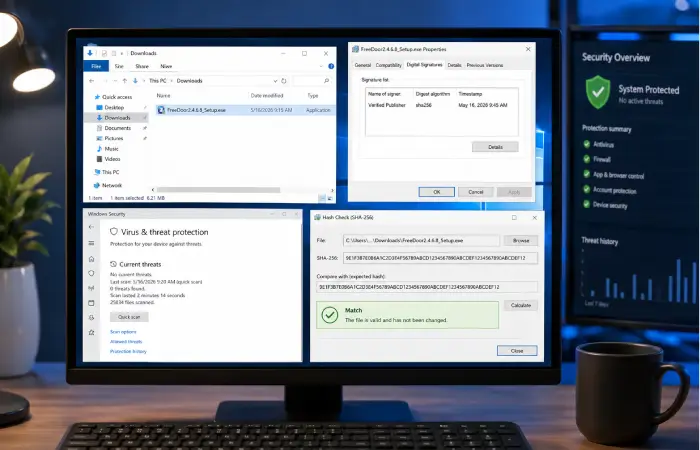
Download safety is particularly important for obscure software versions.
Check the Publisher
The publisher should be identifiable. Be cautious when the software has no company name, official documentation or support information.
Check the Digital Signature
On Windows, open the executable’s properties and look for a Digital Signatures tab.
If a signature exists, verify the signer and whether Windows reports that the signature is valid.
Check the Hash
A cryptographic hash such as SHA-256 can help determine whether a downloaded file matches a known original.
A hash is useful only when you have a trustworthy reference value from the publisher or another authoritative source.
Scan Before Installation
Keep Windows security tools updated and scan unfamiliar executables before opening them.
Do not disable antivirus protection merely because an installer says it is necessary.
Watch for Suspicious Behaviour
Stop the installation if the program:
- Tries to disable antivirus software
- Changes browser settings without explanation
- Installs unrelated applications
- Creates unexplained startup entries
- Requests excessive permissions
- Generates unexpected advertisements
- Redirects web traffic without clear documentation
- Attempts to download additional unknown executables
Is FreeDoor2.4.6.8 PC Safe?
There is not enough reliable public documentation to give a blanket statement that every file labelled FreeDoor2.4.6.8 is safe.
The key issue is the source of the installer.
A filename by itself cannot establish whether an executable is genuine. Two files can have identical names while coming from completely different sources.
For that reason, avoid statements such as “FreeDoor2.4.6.8 is completely safe” unless you have independently verified the publisher, file integrity and security status of a specific release.
A safer approach is to evaluate the individual installer you intend to use.
Common FreeDoor2.4.6.8 PC Problems
If you already installed the program, you may encounter compatibility or configuration problems.
Application Does Not Start
An older application may not be fully compatible with your Windows version.
Try checking the publisher’s compatibility information before changing system settings.
Installation Is Blocked
Windows security features may prevent an unfamiliar executable from running.
Do not immediately bypass the warning. First confirm the file’s source, publisher and security status.
Connection Problems
If FreeDoor is being used for network-related functionality, incorrect configuration can prevent connections from working.
Check:
- Network settings
- Proxy configuration
- Firewall rules
- Port settings
- Authentication details
- Internet connectivity
Application Crashes
Crashes can result from incompatible Windows versions, missing dependencies, corrupted installation files or conflicts with other applications.
Reinstalling from an independently verified installer may help, but do not repeatedly reinstall a file that security software identifies as suspicious. For more related articles visit our website
Should You Download FreeDoor2.4.6.8 From a Third-Party Website?
Extra caution is recommended.
Third-party software sites can be useful for finding older applications, but they can also distribute modified installers, bundled programs or outdated files.
Before downloading, ask:
- Is the publisher clearly identified?
- Is the version number documented?
- Is there an official release history?
- Is the file digitally signed?
- Is a checksum available?
- Does the download page use excessive advertisements or redirects?
- Does your security software report anything suspicious?
If several answers are unclear, finding a better-documented alternative may be safer.
FreeDoor2.4.6.8 Alternatives
If your objective is networking, privacy, remote access or another specific function attributed to FreeDoor, it may be better to choose software with clear documentation and active maintenance.
The best alternative depends on what you actually need the application to accomplish.
For example, users looking for network privacy should research established VPN solutions, while users looking for remote computer access should consider established remote-desktop platforms. These are different use cases and should not automatically be treated as interchangeable with FreeDoor.
Frequently Asked Questions
What is FreeDoor2.4.6.8 PC?
FreeDoor2.4.6.8 PC appears to refer to a software version or build known as FreeDoor 2.4.6.8. Public descriptions of its purpose vary, so users should verify the publisher and exact software functionality before installation.
Is FreeDoor2.4.6.8 available for Windows?
The keyword is associated with PC/Windows software, but compatibility should be confirmed from the documentation accompanying the specific installer.
Is FreeDoor2.4.6.8 safe?
Safety depends on the particular installer and its source. Verify the publisher, digital signature, file integrity and security scan before running an unfamiliar executable.
Can I install FreeDoor2.4.6.8 on Windows 11?
Do not assume compatibility solely from the software name. Older or obscure applications may require specific Windows versions or configuration.
Where should I download FreeDoor2.4.6.8?
Prefer an official publisher source or a reputable software repository. Avoid downloading executable files from suspicious mirrors or pages that provide little information about the publisher.
Why is FreeDoor2.4.6.8 difficult to identify?
The software has limited consistent documentation, and online descriptions may refer to different functions or distributions. This makes source verification particularly important.
Final Verdict
FreeDoor2.4.6.8 PC is a keyword relating to an obscure software version with, as such, insufficient consistency of public description to be confidently said to perform any particular function.
If you have any intentions to installing the software, it would be better to concern yourself with factors outside of the filename and rather focus your attention on the file’s authenticity, its publisher, any digital signature it might carry and whether it has passed checks for malware and is intact.
When dealing with any software that has network connectivity or performs tasks on sensitive parts of your system, you’d be wise to prefer readily accessible, and actively developing, applications rather than relying solely on the chance that an unknown executable matches the version that you asked for.
Before you publish or download the precise file for FreeDoor2.4.6.8, have the publishing organization checked. These checks can save you trouble with compatibility, or of a malware infection.