

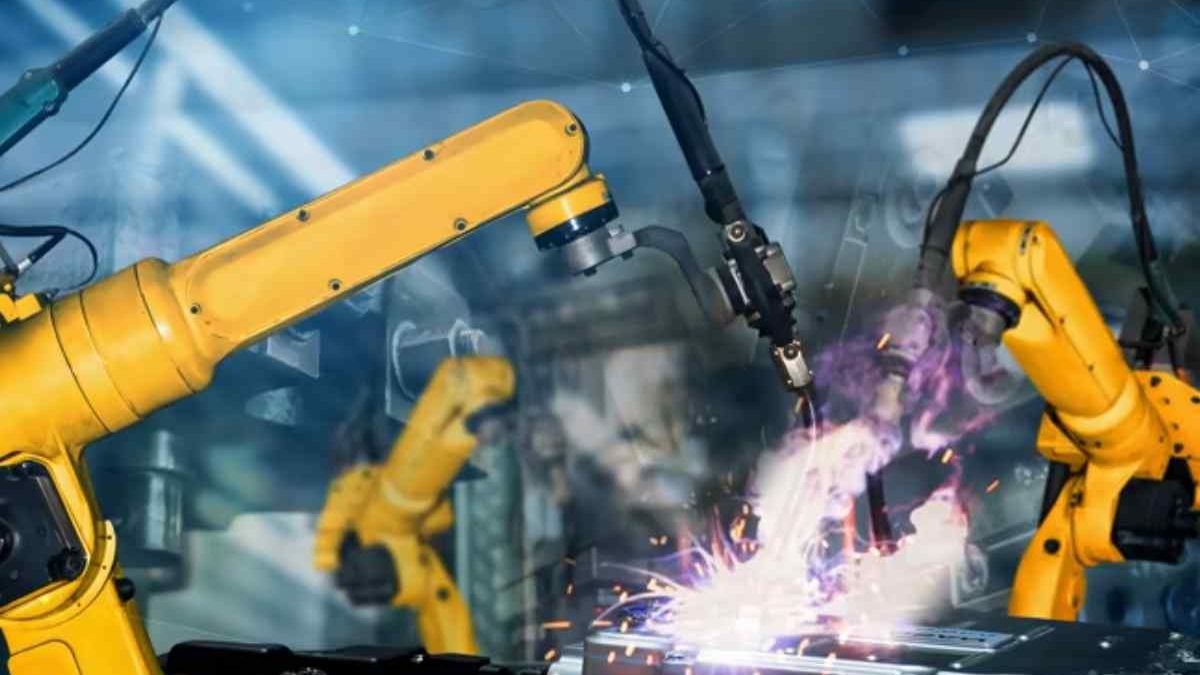
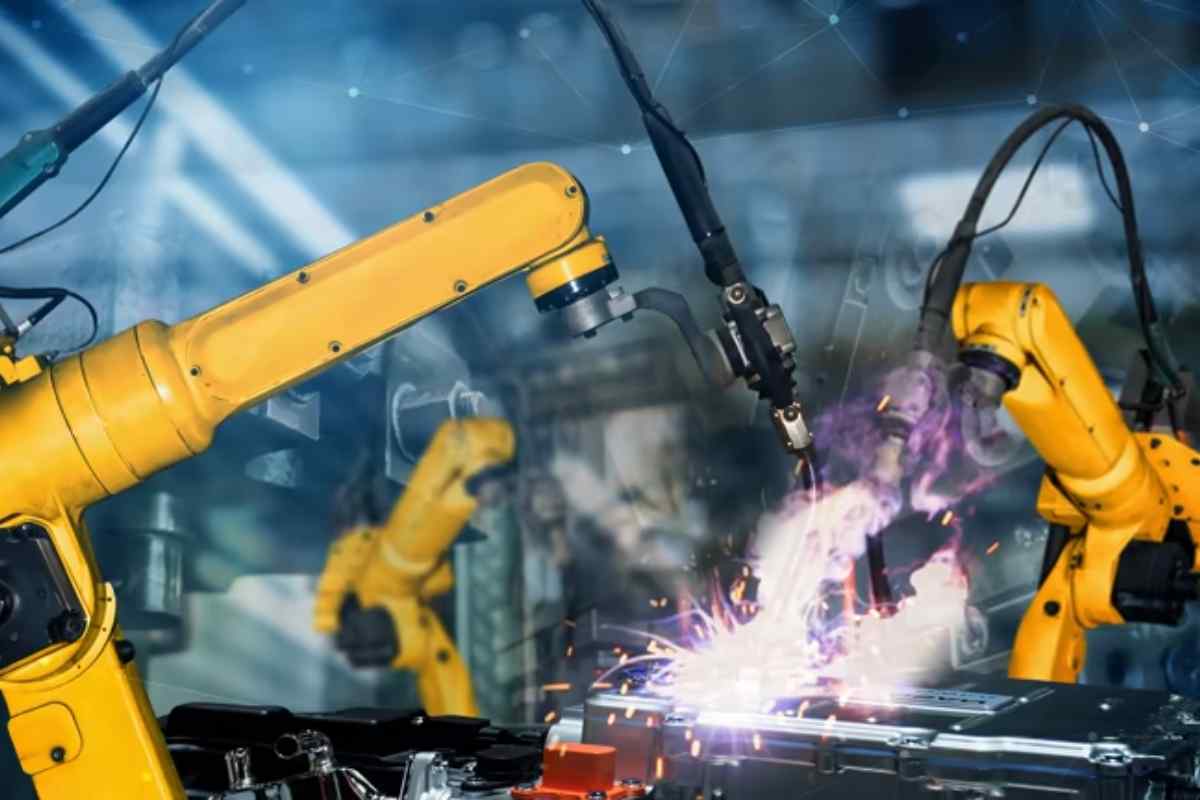
Not long ago, robotic welding was viewed as a productivity upgrade for automotive suppliers. More recently, however, it has shifted from a notable convenience to a risk-management necessity. Robotic welding helps mitigate risks such as operator error, equipment malfunction, and environmental variations during the manufacturing process.
When it was first introduced to the automotive manufacturing industry, robotic welding was often praised for its ability to speed up production processes. However, as the use of automated technology becomes more widespread, manufacturers are focusing less on speed and more on controlling risk. Here’s how automotive manufacturers are reducing liability with the help of robotic welding.
Table of Contents
How Does Robotic Welding Work?
What is robotic welding used for, and how does it work? In the automotive manufacturing industry, robotic welding uses programmable robotic systems to automate the welding process. Robotic machinery follows a pre-defined path to weld metal automotive parts with impressive precision and control. The accuracy of the process helps reduce liability by minimizing the risk of errors.
Robotic welding equipment simplifies the manufacturing process. It also offers both versatility and efficiency, making it easier to meet tight deadlines without sacrificing quality or accuracy. If you’re looking for ways to increase the quality of your products and reduce your liability, robotic welding may be a smart move.
Benefits of Robotic Welding
The advantages of robotic welding are significant and varied. They include:
- Reduced employee exposure to welding hazards, leading to an overall safer working environment.
- Enhanced weld quality, consistency, and accuracy, leading to increased structural integrity and reduced liability.
- Long-term cost savings that make up for the high initial cost.
- Efficient use of materials with minimal waste, thanks to precision welding processes.
- The ability to scale up your operations without hiring more full-time welders.
How Robotic Welding Automation Reduces Liability
Ensuring the accuracy and safety of your products is critical to reducing liability in the automotive manufacturing industry. Robotic welding automation reduces liability for automotive manufacturers in the following key ways:
Reducing Defect Rates
High defect rates can be catastrophic for automotive manufacturers. They can lead to delayed deliveries, increased production costs, plummeting employee morale, and reputational damage. If you want to reduce your liability, it’s crucial to focus on reducing your defect rates. Robotic welding can help in this area by offering consistent and precise welds.
Although speed isn’t the most important benefit of robotic welding automation, it is certainly one of the notable advantages. Producing more vehicles in less time with fewer defects can be a game-changer for your success as an automotive manufacturer.
Improving Traceability
Robotic welding equipment can improve traceability by providing a well-documented digital record for each product. Many automated robotic welding systems can maintain a seamless, detailed record that begins at the first weld and ends at the last. This is a huge improvement over manual methods, which are often susceptible to human errors and rely on sporadic inspections.
Automated welding equipment eliminates human error, performs consistent parameters on every cycle, and offers real-time data access. Immediate feedback makes it possible to promptly intervene to correct errors or catch untraceable parts before they move on to the next phase of production.
Protecting Against Costly Recalls and Contract Penalties
It’s no secret that automotive recalls can be financially devastating. Discovering that errors in your welding processes led to one or more defect-related product recalls can also be reputationally damaging.
Robotic welding solutions can protect against costly recalls and resulting contract penalties. They guarantee a high degree of accuracy and high-speed consistency. They also reduce structural failures by offering consistent, uniform welds and strict data traceability for additional compliance.
Different Types of Robotic Welding Systems
There are several different types of welding techniques that can be performed by robotic welding systems. They include:
- Robotic Laser Welding: This welding process uses specialized robotic technology to fuse metal parts with minimal heat distortion using a high-intensity, focused laser beam. It yields precise, fast results and is a popular form of automated welding in the automotive and aerospace industries. It’s also valued for its ability to support high-volume project needs.
- Robotic arc welding: This is when intense heat is generated by creating an electric arc between a base material and an electrode. This method is popular in automotive manufacturing because it’s versatile and works well with a wide variety of metals.
- Robotic MIG welding: This type of welding is known for its speed and precision. It utilizes a programmable robot to weld metal parts together using shielding gas and a continuous filler wire.
- Robotic TIG Welding: This process uses robotic arms to weld metal parts using tungsten inert gas (TIG). It allows for superior control and can reduce heat distortion on complex or delicate components. It also increases productivity when compared to manual TIG welding.
Reduce Liability With Robotic Welding Services
Robotic welding services are enhancing and reshaping metal fabrication in the automotive industry. They offer faster production cycles, consistent and precise welds, and can improve workplace safety. They also reduce the risk of costly recalls and contract penalties, thereby reducing your liability and preserving your reputation. If you would like to enjoy the many benefits robotic welding services can offer, consider working with a fabrication partner that utilizes this impressive technology.