

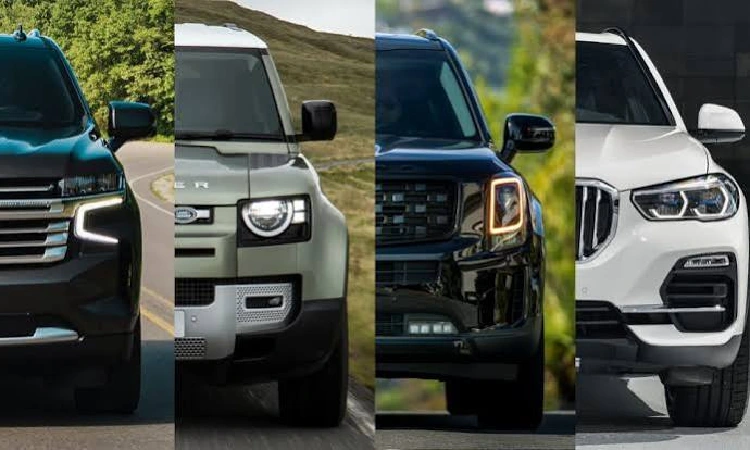
The popularity of sport utility vehicles (SUVs) has grown significantly over the years. Their appeal comes from a combination of spacious interiors, elevated driving positions, versatile seating arrangements, and the ability to handle a variety of road conditions. With options ranging from compact urban crossovers to rugged off-road vehicles, there is an SUV for many different needs and budgets.
However, choosing the right SUV requires more than simply considering its appearance or size. Factors such as drivetrain, comfort, safety, fuel economy, performance, and maintenance costs can make a significant difference to your ownership experience.
If you are planning to buy an SUV but are unsure which model best suits your needs, here are the most important factors to consider before making your decision.
Table of Contents
1. Drivetrain: Two-Wheel Drive, Four-Wheel Drive, or All-Wheel Drive
One of the first things to consider is the type of drivetrain an SUV offers. Your choice should depend on where you drive, the road conditions you encounter, and how you intend to use the vehicle.
Two-wheel drive (2WD) sends power to either the front wheels or the rear wheels. Many urban SUVs use front-wheel drive because it can offer good fuel efficiency, predictable handling, and lower ownership costs.
Four-wheel drive (4WD) systems are commonly found in vehicles designed for challenging terrain. Depending on the system, the driver may be able to select different modes for mud, sand, rocks, or other difficult surfaces. This can be useful for off-road driving and demanding conditions.
All-wheel drive (AWD) systems distribute power between the front and rear wheels automatically or through a controlled system. They can improve traction on wet, slippery, or uneven roads, although their capabilities vary by vehicle.
Before choosing, consider whether you mainly drive in the city, travel on motorways, encounter rough rural roads, or regularly go off-road. A two-wheel-drive SUV may be sufficient for everyday commuting, while AWD or 4WD may be more appropriate for specific driving conditions. Keep in mind that no drivetrain can replace suitable tyres and careful driving.
2. Comfort and Interior Space
Comfort is essential, especially if you regularly travel with family or spend long hours behind the wheel. An SUV may look spacious from the outside, but the actual room available to passengers can vary considerably.
Check the front and rear legroom, headroom, seating position, and ease of entry and exit. If you regularly carry children or older passengers, consider how easily they can access the rear seats. Families should also check the boot capacity and whether the luggage area can accommodate shopping bags, suitcases, or other everyday items.
Other useful features include adjustable seats, rear air-conditioning vents, climate control, cruise control, parking sensors, and a rear-view camera. Electronic stability control and other driver-assistance systems can also contribute to safer driving.
Take a test drive before making your decision. Pay attention to visibility, seat support, road noise, suspension comfort, and how easily you can reach the vehicle’s controls.
3. Safety Features and Crash Protection
Safety should be a priority when buying any vehicle, particularly one intended for family use. A larger vehicle is not automatically safer, so it is important to examine its safety equipment and independent crash-test performance.
Look for essential features such as:
- Airbags: Check how many are fitted and where they are positioned. The number and type of airbags vary by model and trim.
- Anti-lock braking system (ABS): Helps prevent the wheels from locking during hard braking, assisting the driver in maintaining steering control.
- Electronic stability control (ESC): Helps the driver maintain control when the vehicle begins to skid or deviate from the intended direction.
- Tyre-pressure monitoring: Available on selected models, this system can alert the driver to potentially low tyre pressure.
- Driver-assistance features: Depending on the vehicle, these may include automatic emergency braking, blind-spot monitoring, lane-departure warnings, and rear cross-traffic alerts.
Also examine independent crash-test ratings for the exact model and market where possible. Check child-seat mounting provisions if you travel with young children, and confirm that the safety equipment you need is included in your chosen variant.
4. Fuel Economy and Running Costs
Fuel economy has a direct impact on the cost of owning an SUV. Larger vehicles and powerful engines can consume more fuel, although actual consumption depends on factors such as engine design, transmission, vehicle weight, traffic, driving style, and maintenance.
If most of your driving takes place in crowded cities, a compact SUV or a model with a smaller engine may be more economical. Hybrid vehicles can offer additional efficiency in certain driving conditions, while diesel engines may suit some drivers who regularly cover long distances, depending on local availability and ownership costs.
Do not rely solely on the manufacturer’s claimed fuel-consumption figures. Look for realistic owner-reported figures and consider the type of driving you do most often.
You should also account for expenses beyond fuel, including insurance, servicing, tyres, replacement parts, taxes, and repairs. A vehicle with a higher purchase price may still be more affordable to own over time if its running costs are lower.
5. Engine Performance and Driving Requirements
Performance is another important factor, but the most powerful SUV is not necessarily the best choice for every driver.
Engine output, measured in horsepower or PS, influences a vehicle’s acceleration and performance. However, power alone does not tell the full story. Torque, vehicle weight, transmission tuning, and drivetrain design also affect how an SUV feels on the road.
For city driving and everyday family use, a modestly powered SUV may provide all the performance you need. If you frequently travel on highways, drive through hilly areas, or carry several passengers and luggage, you may benefit from an engine with stronger acceleration and better flexibility.
High-performance SUVs offer considerably more power, but they often come with higher purchase prices, fuel consumption, tyre costs, and insurance expenses. Before paying extra for performance, consider whether it will make a meaningful difference to your driving.
A test drive is the best way to evaluate acceleration, braking, steering, transmission response, and overall handling.
6. Intended Use: City Driving, Family Travel, or Off-Roading
The right SUV depends largely on how you intend to use it. A compact crossover may be ideal for city commuting, while a larger SUV may provide more passenger space and luggage capacity for family trips.
If you regularly drive on rough roads or travel to remote locations, examine the vehicle’s ground clearance, approach and departure angles, tyres, suspension, and drivetrain. These factors can matter more than exterior styling alone.
For example, buyers interested in a rugged utility vehicle can explore the Mahindra Scorpio to learn more about an SUV aimed at buyers who value a strong road presence and practical versatility.
Drivers who want a luxury SUV with high performance may also consider the Mercedes-AMG G63. It belongs to a very different price and performance category, so purchase costs and running expenses should be considered carefully.
If your requirements are primarily commercial, such as transporting goods for a business, a conventional SUV may not be the most suitable option. It may be worth comparing the capabilities of mini trucks, which are designed around practical load-carrying needs rather than passenger comfort alone.
7. Budget, Maintenance, and Resale Value
Before buying an SUV, establish a realistic budget that includes both the purchase price and long-term ownership expenses.
Compare the prices of different variants and check which features are included as standard. Some models may offer important safety equipment only in higher trims, so a lower introductory price does not always represent the best value.
Research the cost and availability of spare parts, the manufacturer’s service network, warranty coverage, and scheduled maintenance requirements. If you are buying a used SUV, review its service history, inspect the tyres and suspension, check for signs of accident damage, and arrange a professional inspection.
Resale value is another consideration. Popularity, reliability, maintenance records, mileage, vehicle condition, and local demand can all influence how much you receive when you sell the vehicle.
The best SUV is not necessarily the cheapest or most expensive. It is the one that meets your needs while remaining affordable to maintain over the years.
Conclusion
Buying an SUV involves balancing several important factors, including drivetrain, comfort, safety, fuel economy, engine performance, practicality, and running costs. The right choice depends on your budget, daily routine, passenger and luggage requirements, and the types of roads you regularly travel on.
Before making a decision, compare different models, research their safety ratings, check the specifications of your preferred variants, and take a test drive. If you are considering a used SUV, pay particular attention to its condition, service history, and maintenance requirements.
Choosing an SUV based on your actual needs rather than appearance or horsepower alone will help you find a vehicle that delivers a comfortable, safe, and satisfying ownership experience.
Frequently Asked Questions
What level of engine performance should I look for in an SUV?
There is no single horsepower figure that suits every SUV buyer. A compact SUV used mainly for city commuting may perform well with a relatively modest engine, while larger vehicles or those used for frequent highway travel may benefit from additional power and torque. Consider the vehicle’s weight, transmission, expected load, and driving conditions rather than choosing by horsepower alone.
Which type of SUV is best to purchase?
The best SUV depends on your needs and budget. A compact SUV may suit city driving, a spacious family SUV may be more suitable for regular passenger travel, and a 4WD vehicle may be preferable for demanding off-road conditions. If your main requirement is carrying commercial loads, a mini truck may be a more practical alternative.
Is an AWD or 4WD SUV necessary for everyday driving?
Not necessarily. A two-wheel-drive SUV is sufficient for many daily journeys on paved roads. AWD can provide additional traction in certain slippery conditions, while 4WD may be useful for challenging terrain. Your choice should reflect your normal driving conditions and the capabilities of the specific vehicle.
What should I check before buying a used SUV?
Review the service history, accident records where available, mileage, tyre condition, suspension, brakes, engine, transmission, and electronic systems. Check the vehicle’s registration and ownership documents, verify its safety equipment, and arrange an independent mechanical inspection before completing the purchase.