

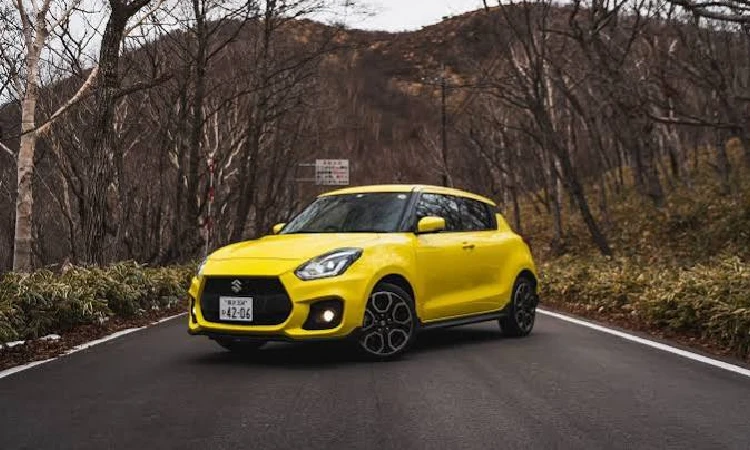
The Suzuki Swift Sport is a compact performance hatchback that combines sporty styling, engaging handling, and practical everyday usability. It can appeal to young driving enthusiasts and small families looking for a car that offers more excitement than a conventional hatchback.
Its compact dimensions make it convenient for urban driving, while its turbocharged engine in many versions provides a satisfying balance of performance and efficiency. Safety equipment and crash-test ratings, however, vary by model year and market, so it is important to check the exact version before buying.
Here are five reasons why the Suzuki Swift Sport may deserve a place on your car-buying shortlist.
Table of Contents
1. Advanced Airbag System
Airbags are an important part of a car’s occupant-protection system. Depending on the model year and market, the Suzuki Swift Sport can include front airbags, side airbags, and curtain airbags designed to help protect occupants during certain types of collisions.
These features work alongside seat belts and the car’s structural design to help reduce the risk of injury. However, airbags do not eliminate the risk of injury, and all occupants should wear their seat belts on every journey.
When comparing Swift Sport models, check the number and placement of airbags, as well as any additional driver-assistance features available in your region.
2. Electronic Stability Control
Electronic stability control helps drivers maintain control when a vehicle begins to lose directional stability. The system can apply braking to individual wheels and adjust engine power, where supported, to help the car follow the driver’s intended direction.
This technology can be especially useful during sudden manoeuvres or when road conditions reduce grip. Nevertheless, stability control cannot overcome the limits of tyre traction, so careful driving remains essential in rain, on slippery roads, and around sharp bends.
For drivers who enjoy sporty handling, electronic stability control provides an important layer of support without replacing responsible driving.
3. Anti-Lock Braking System (ABS) and Electronic Brakeforce Distribution (EBD)
The Anti-Lock Braking System (ABS) helps prevent the wheels from locking during hard braking, allowing the driver to retain more steering control. Electronic Brakeforce Distribution (EBD), where fitted, helps distribute braking force between the wheels according to driving conditions and load.
Together, these systems can support controlled braking during emergency stops. They are particularly relevant when road surfaces are wet or slippery, although stopping distances still depend on factors such as tyre condition, speed, road surface, and the driver’s response.
Before purchasing a used Swift Sport, confirm that its braking and safety systems are functioning correctly and have been maintained according to the manufacturer’s recommendations.
4. Safety Ratings and Driver-Assistance Features
Safety ratings are an important consideration when choosing a car for everyday use. The Suzuki Swift range has received different ratings across model years and markets, so it would be inaccurate to describe every Swift Sport as a five-star-rated car.
For example, ANCAP awarded the 2017-generation Suzuki Swift a four-star safety rating for variants including the Swift Sport sold in Australia and New Zealand. That rating applied to specified versions and should not be treated as a rating for every later model or for vehicles sold in other countries.
Safety equipment can also differ between versions. Depending on the market and year, available features may include autonomous emergency braking, lane-support systems, and other driver-assistance technologies.
When comparing cars, review the crash-test rating for the exact model year and market you intend to buy. You can also explore another performance-oriented hatchback in our guide to the Honda Civic Type R, which offers a different approach to sporty driving.
5. Fuel Efficiency and Everyday Practicality
The Suzuki Swift Sport combines a relatively compact body with a performance-focused engine. Many recent Swift Sport versions use a 1.4-litre BOOSTERJET turbocharged petrol engine, although specifications vary by generation and market.
Turbocharging helps deliver useful torque at lower engine speeds, giving the car responsive acceleration without requiring a large-displacement engine. Its actual fuel consumption depends on driving style, traffic, road conditions, transmission, and the model year.
The Swift Sport can be suitable for daily commuting as well as weekend drives, particularly for buyers who value responsive handling and compact dimensions. However, enthusiastic acceleration and frequent high-speed driving can increase fuel consumption.
If you are comparing performance cars, our guides to what defines a supercar and the best sports cars provide more context on different types of performance-focused vehicles.
Is the Suzuki Swift Sport Worth Considering?
The Suzuki Swift Sport brings together sporty styling, responsive performance, compact dimensions, and useful everyday practicality. It may be a good choice for drivers who want an engaging hatchback without moving to a larger or more expensive performance car.
Before making a decision, compare the purchase price, fuel costs, insurance, maintenance requirements, available safety equipment, and model-specific crash-test results. If you intend to use it as a family car, also consider rear-seat space, luggage capacity, child-seat compatibility, and the comfort of all passengers.
Contact an authorised Suzuki dealer in your market to confirm which model and equipment options are available.
Frequently Asked Questions
What are the engine specifications of the Suzuki Swift Sport?
Many recent versions feature a 1.4-litre BOOSTERJET turbocharged petrol engine. Depending on the generation and market, outputs are commonly around 138–140 horsepower, with approximately 230 Nm of torque. Specifications can differ, so check the details for the exact version you are considering.
What is the fuel economy of the Suzuki Swift Sport?
Fuel economy varies by model year, transmission, local test cycle, and driving conditions. Real-world consumption may be higher in heavy traffic or during spirited driving. Check the official fuel-economy figures for your market and compare them with owner-reported results before buying.
How spacious is the Suzuki Swift Sport?
The Swift Sport is a compact hatchback with seating for up to five people, depending on the market specification. The front seats are generally designed to provide support during spirited driving, while the rear seats and boot are suitable for everyday errands and shorter trips. Buyers who regularly travel with five occupants or carry substantial luggage should assess the available space in person.
Is the Suzuki Swift Sport a safe family car?
It can provide useful safety equipment, but its suitability depends on the model year, market, and fitted features. Check the relevant crash-test assessment, confirm the available airbags and driver-assistance systems, and make sure child seats fit properly if needed.
Is the Suzuki Swift Sport a supercar?
No. The Suzuki Swift Sport is generally classified as a sporty compact hatchback rather than a supercar. It prioritises accessible performance, compact dimensions, and everyday usability rather than the extreme power, cost, and engineering associated with supercars.